Why doesn't a surge protector save your gear in an ungrounded socket?
A device sold as “surge protection” absorbs nothing. It diverts the surge into a third wire, the grounding conductor — and a socket with two holes has nowhere to divert it to. The joule rating on the box does not change that.
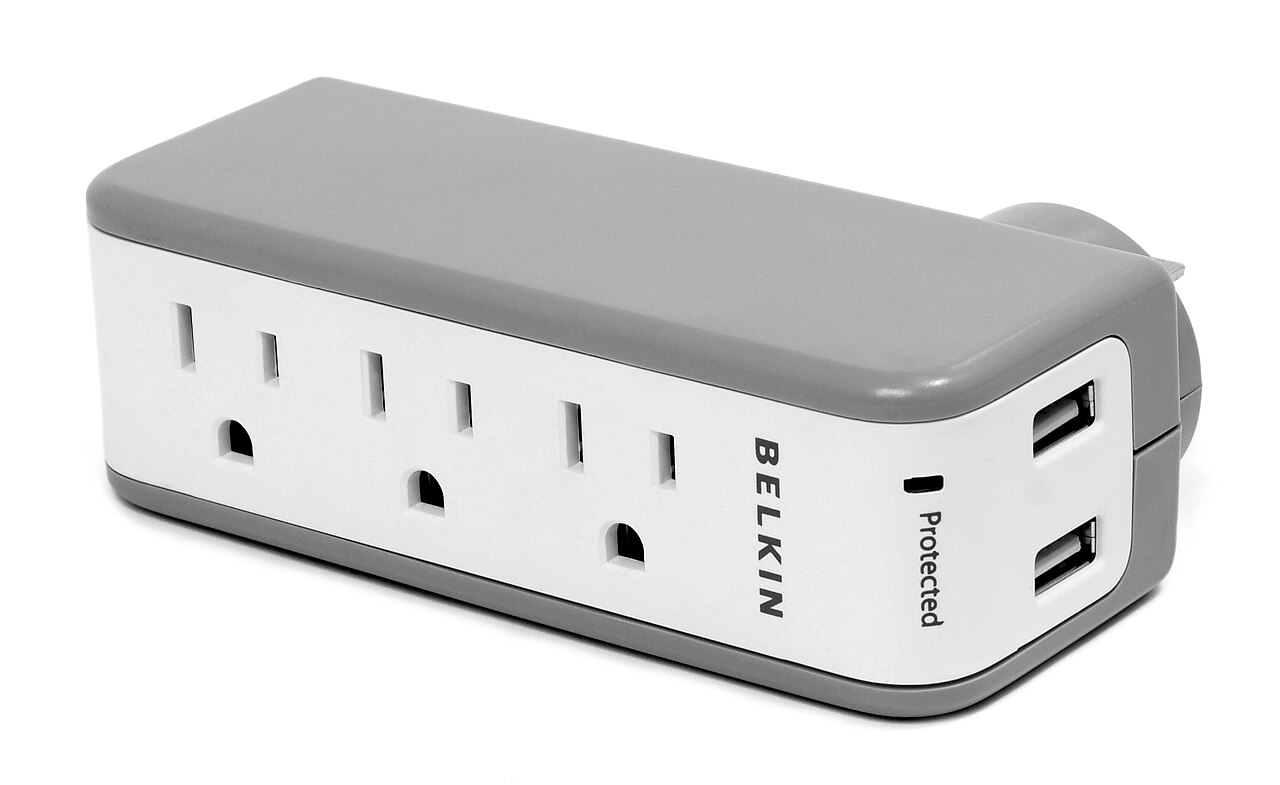
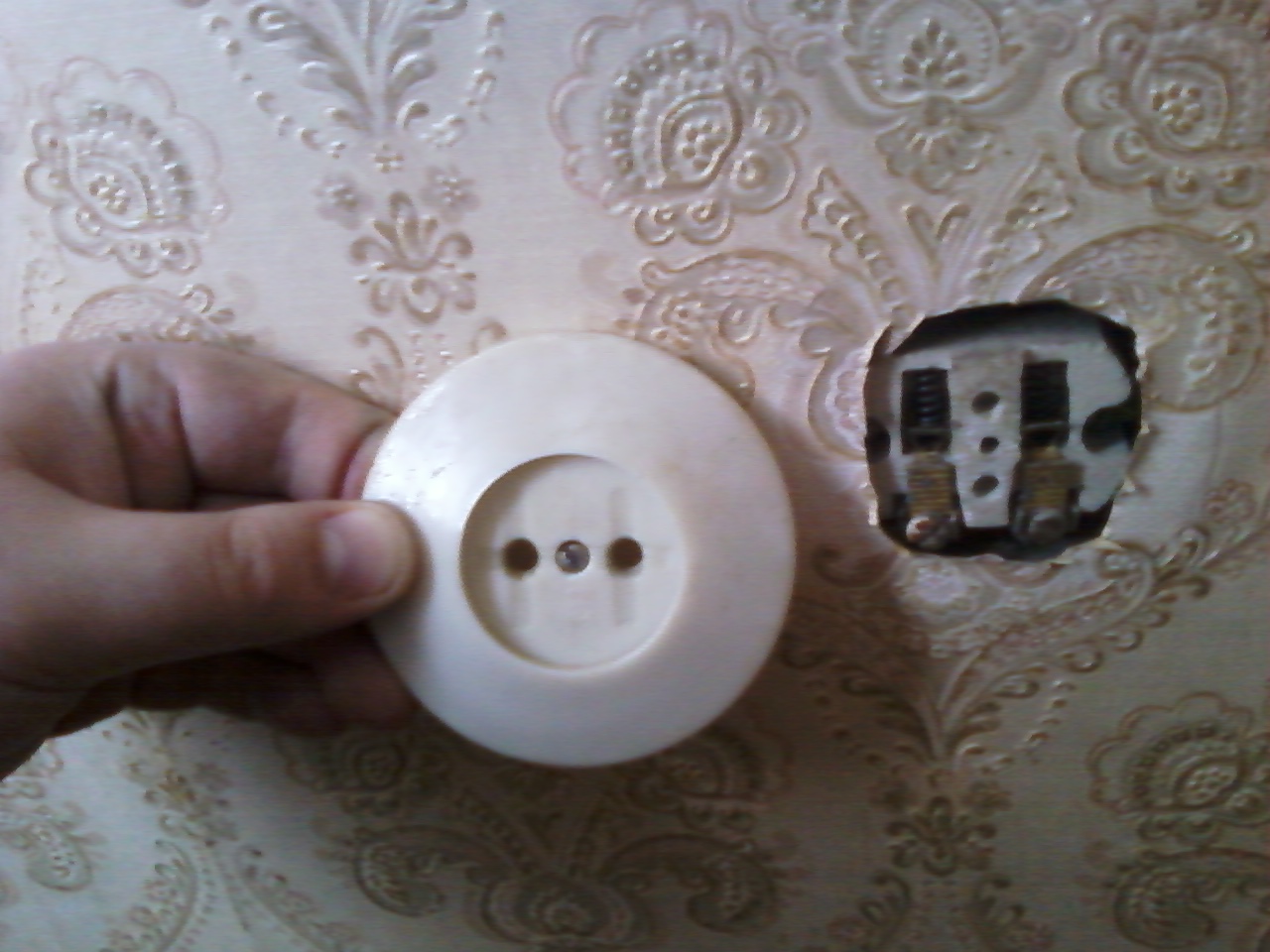
A thunderstorm, a flash outside the window — and afterwards the router will not switch on. It had not been plugged straight into the wall: it sat in a surge protector, an extension strip with a switch and the words “surge protection, 1000 J” printed on the case. The green light is still glowing. The socket in the flat is an old one, two holes, no third contact anywhere. The strip itself is undamaged and its fuse never blew.
The easiest picture to reach for is a sponge. Joules on the box are the volume of the sponge, it soaks up the surplus energy, and a bigger number soaks up more. Grounding stands off to one side in that picture — a requirement for human safety, not for protecting equipment. The picture is coherent, and it is wrong in the one place that matters.
The device nobody gave a proper name
The US National Institute of Standards and Technology wrote SP 960-6, “Surges Happen!”, for homeowners, and it opens by admitting that all the familiar words are inexact. Engineers say surge-protective device. Underwriters Laboratories picked Transient Voltage Surge Suppressor, which is where the TVSS on the packaging comes from. Page 6 explains why none of that describes the process: “What these protective devices do is neither suppress nor arrest a surge, but simply divert it to ground, where it can do no harm. So a name that makes sense would be ‘surge diverter’ but it was not picked.”
Inside the strip sits a component that behaves as an insulator at ordinary mains voltage and becomes a conductor within microseconds once the voltage climbs above its threshold. From that moment there is a low-resistance bridge between two of the conductors. Voltage across the appliance stops rising precisely because the current has taken a detour. It has to take that detour somewhere specific, though, and that is not an installation detail — it is the mechanism itself.
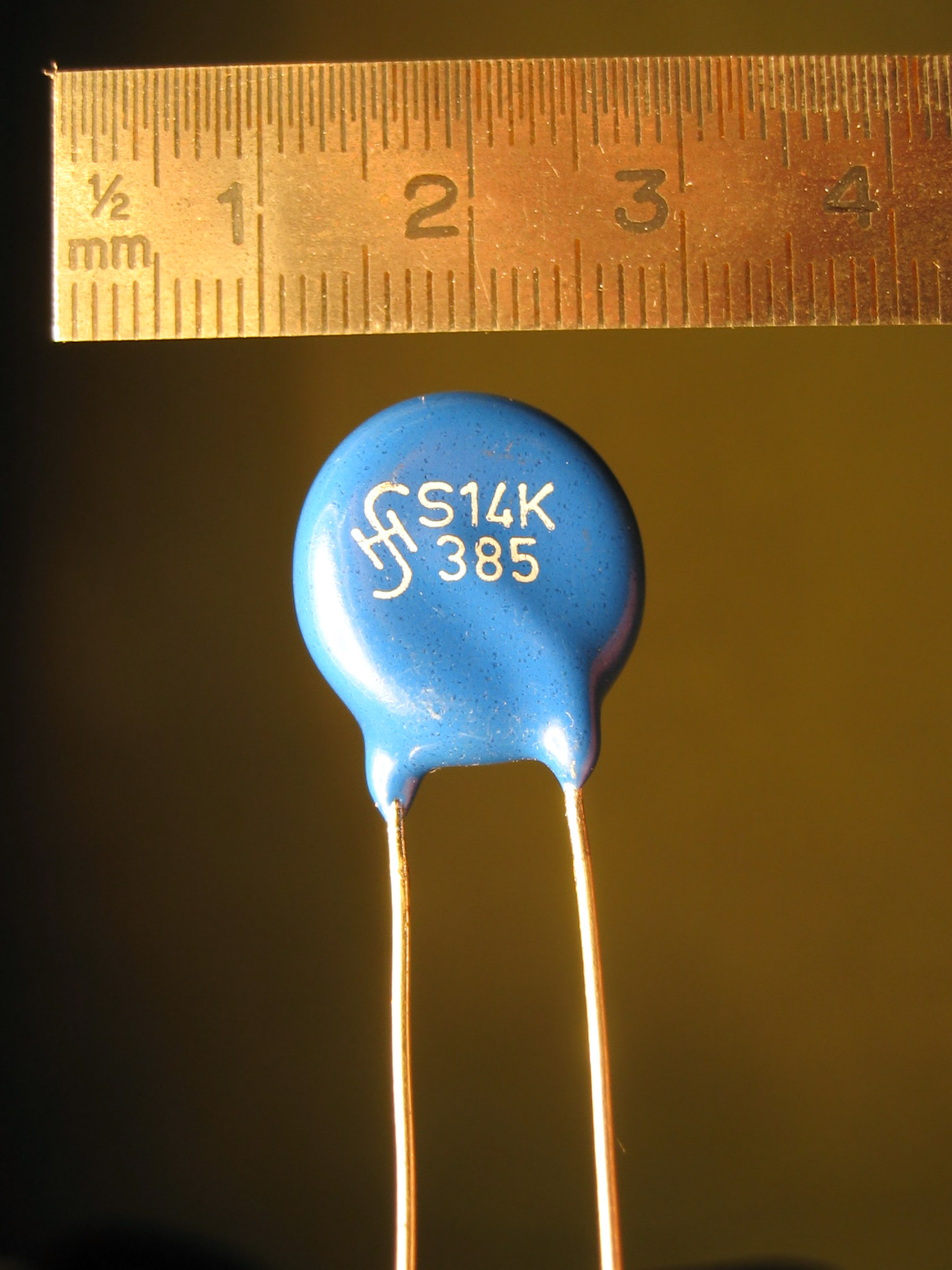
Two numbers on page 15 describe the event from opposite ends. On the clamping voltage the brochure says that “Many specifications show 330 volts for this voltage.” On the peak current: “You will find a range of values from several hundred to several thousand amperes.” Three hundred and thirty volts hold across the appliance for exactly as long as those thousands of amperes are running through the limiter into the protective conductor. The first number is the promise sold to the buyer. The second is the bill for that promise, and it is the conductor that pays it.
Joules measure something other than what the buyer assumes. NIST defines the rating as “a (simplified) measure of the surge energy that the protector can dissipate without damage to itself” — to itself; typical values in the brochure run from about a hundred joules to a thousand and more. And the next line of the same paragraph is the key to our socket: “Because this joule number is often based on the three combinations of the wiring, many specifications show the total joules rather than a breakdown among each of the three combinations.”
There really are three of them: line to neutral, line to ground, neutral to ground. Those are all the pairs three wires can make. Two wires make one pair. Take the protective conductor away and the three combinations behind the number on the box come down to that single one.
Thirty centimetres already decide something
How much that conductor matters shows up in the small print on page 17. Where the brochure lists the places to mount a limiter inside the service panel, a footnote adds that it belongs closer than thirty centimetres — one foot — to the panel, or the voltage-limiting effect will suffer. Thirty centimetres. Not thirty metres and not “somewhere nearby”: a length of wire nobody would even notice inside a panel.
Its size is left unstated. The word in the footnote is degraded, with no figure beside it, but the order of magnitude is clear enough and the whole answer sits in it. If a spare hand's breadth of wire already changes something in a properly built panel, then a socket without a third conductor is not “a bit worse” — it is a different situation entirely.
What the box says, and what is behind it
Every line on the packaging gets taken apart in the brochure, and almost none of them means what it reads like on first pass. On the left is what is printed on the box; on the right, what NIST sees behind it.
| Printed on the box | What is behind it |
|---|---|
| Clamping voltage, 330 V | The value is embedded in the UL standard values, but it is not a requirement: NIST writes that “somewhat higher clamping voltages, such as 400 volts or more, may be sufficient for protecting electronic appliances” |
| Peak current, hundreds to thousands of amperes | That is what has to go into the protective conductor while those 330 volts hold across the appliance |
| Energy, 100–1000 J and more | How much the device will dissipate without damaging itself; the figure is mostly a total across the three wiring combinations |
| A “Protection on” light | What exactly it indicates is not set by any standard |
A lower clamping voltage, then, does not automatically mean better protection, and the joule on the box belongs to the limiter rather than to the appliance. The weakest row is the last one, and the brochure meets it with a question instead of an explanation: “If the protector maintains power on the load side, how often will you look under or behind your desk to check and make sure that the ‘Protection on’ light is still on?”
What to look at in your own socket
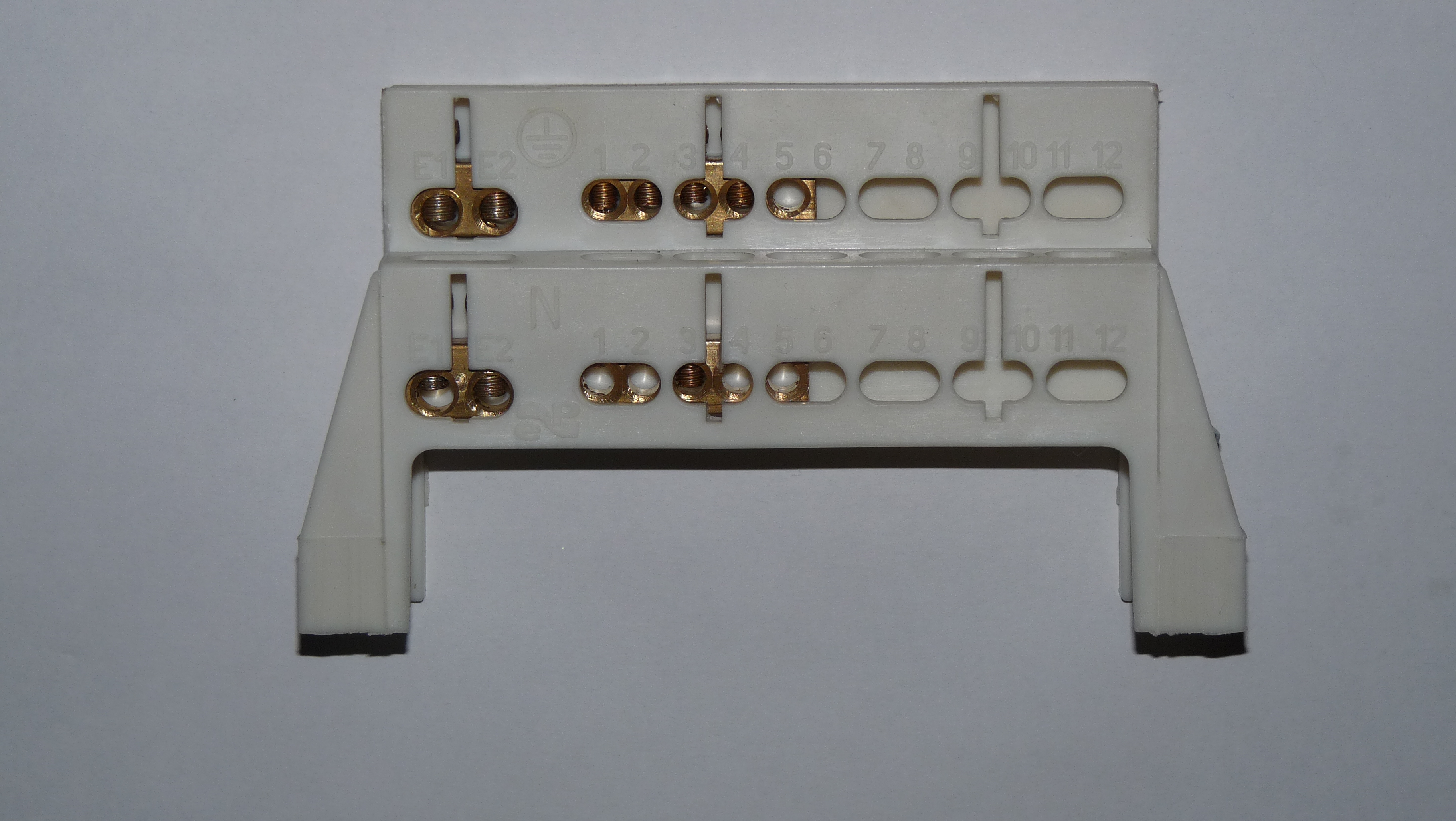
Start with the outlet. In a domestic socket the third contact is either a separate pin inside the recess or a pair of metal clips above and below the holes. If the wall offers two holes and nothing more, the limiter has one pair to work with there, not three.
Next comes the plug on the strip itself. A flat plug with no grounding contact means the third conductor inside the extension lead is connected to nothing, however modern the socket in the wall happens to be.
Third is the cheater plug, the adapter that pushes a three-pin plug into a two-hole socket. Page 12 is cautious about it: some of these combined protectors “might not work very well” in such a socket, and “on some, an indicating light will signal that”. On some. The reason had been given earlier, on page 7: “these indications are not standardized, and the meaning might be confusing, between one, two – even three or four lights”.
What grounding still cannot cover
Grounding is necessary, and it guarantees nothing where an appliance has two service entrances. Page 18 describes that case. A surge arrives along the communication line and drains into the common grounding point, and in the loop formed by the two entrances and the appliance between them a voltage Vdiff appears between the power input and the signal input. NIST is blunt about it: “The presence or absence of surge protection on the AC side (Arrester or SPD) has no effect on the coupling.”
That is why the US National Electrical Code of 1999 capped the distance between the power service entrance and the communication service entrance at twenty feet — seven metres. It is a requirement about how the building was planned, not about what gets plugged into a socket.
One last boundary belongs to the brochure itself. SP 960-6 was written for American homes: the sockets are American, so are the codes, and the numbers on the packaging are tied to UL standards. None of that changes the mechanism — pairs of conductors and the question of where the current is supposed to go work the same way everywhere. The specific 330 volts and the reference to the NEC, though, belong to an American context, and carrying them over to a Ukrainian socket word for word is a mistake.
The sources this article was written from
- NIST SP 960-6, p. 6 — the honest name for the device: «What these protective devices do is neither suppress nor arrest a surge, but simply divert it to ground, where it can do no harm. So a name that makes sense would be "surge diverter" but it was not picked»
NIST Special Publication 960-6 «Surges Happen! How to Protect the Appliances in Your Home» (2001) — https://nvlpubs.nist.gov/nistpubs/Legacy/SP/nistspecialpublication960-6.pdf - NIST SP 960-6, p. 15 — the numbers off the packaging: «Many specifications show 330 volts for this voltage»; «You will find a range of values from several hundred to several thousand amperes»; «A (simplified) measure of the surge energy that the protector can dissipate without damage to itself»; «about 100 joules, up to 1000 joules or more»
NIST Special Publication 960-6 (2001) — https://nvlpubs.nist.gov/nistpubs/Legacy/SP/nistspecialpublication960-6.pdf - NIST SP 960-6, p. 15 — the three wiring combinations and the standing of the 330 figure: «Because this joule number is often based on the three combinations of the wiring, many specifications show the total joules rather than a breakdown among each of the three combinations»; «This number is embedded in the UL standard values, but it is not a requirement»; «somewhat higher clamping voltages, such as 400 volts or more, may be sufficient for protecting electronic appliances»
NIST Special Publication 960-6 (2001) — https://nvlpubs.nist.gov/nistpubs/Legacy/SP/nistspecialpublication960-6.pdf - NIST SP 960-6, p. 17, the footnote on conductor length: «The protector should be located close to the service panel (less than about 30 cm or one foot), otherwise the voltage-limiting effect will be degraded»
NIST Special Publication 960-6 (2001) — https://nvlpubs.nist.gov/nistpubs/Legacy/SP/nistspecialpublication960-6.pdf - NIST SP 960-6, pp. 7 and 12 — the cheater plug and the indicator lights: «Some of these combined protectors might not work very well if plugged into a 2-blade receptacle, using a "cheater" plug. (On some, an indicating light will signal that.)»; «these indications are not standardized, and the meaning might be confusing, between one, two – even three or four lights»; «If the protector maintains power on the load side, how often will you look under or behind your desk to check and make sure that the "Protection on" light is still on?»
NIST Special Publication 960-6 (2001) — https://nvlpubs.nist.gov/nistpubs/Legacy/SP/nistspecialpublication960-6.pdf - NIST SP 960-6, p. 18 — two service entrances and the voltage Vdiff: «The presence or absence of surge protection on the AC side (Arrester or SPD) has no effect on the coupling», plus the NEC 1999 limit of twenty feet between the entrances
NIST Special Publication 960-6 (2001) — https://nvlpubs.nist.gov/nistpubs/Legacy/SP/nistspecialpublication960-6.pdf