Why won't a phone bought in the US see a Ukrainian network?
A band in a mobile standard is not one stretch of spectrum but two: one where the phone transmits, another where it receives. In Ukrainian LTE 800 those halves sit in the reverse order, and the filter in an American handset, tuned to its own order, misses the second half.
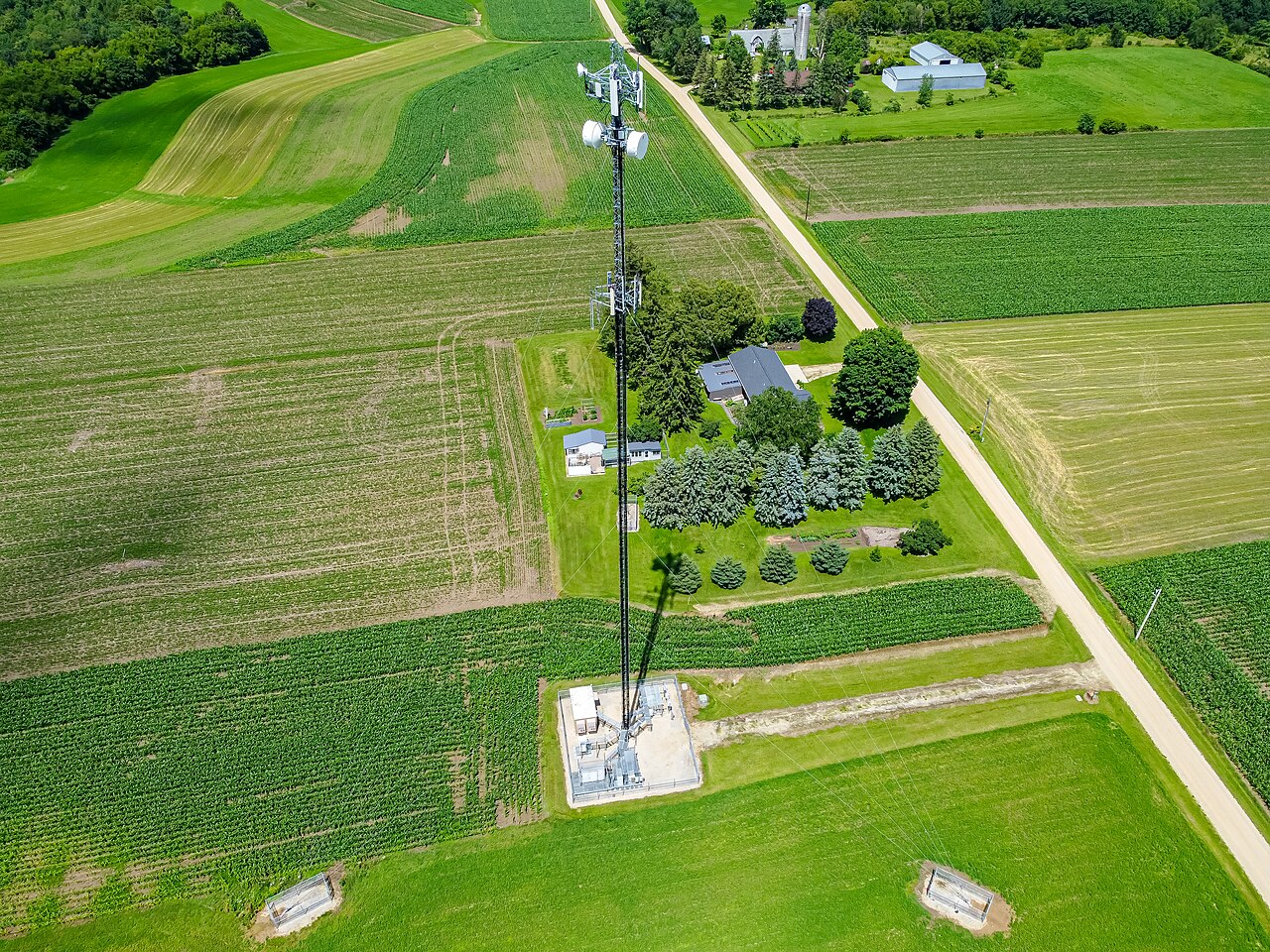
The phone came over from New York, a Ukrainian SIM went into it, and around town it works fine. A hundred kilometres out, the mobile network vanishes for it: the signal indicator goes dark, while a neighbour's handset on the same table shows four bars on the same operator and plays video without complaint. Swapping the SIM at a shop changes nothing. Network selection is on automatic, roaming is off, the system is up to date.
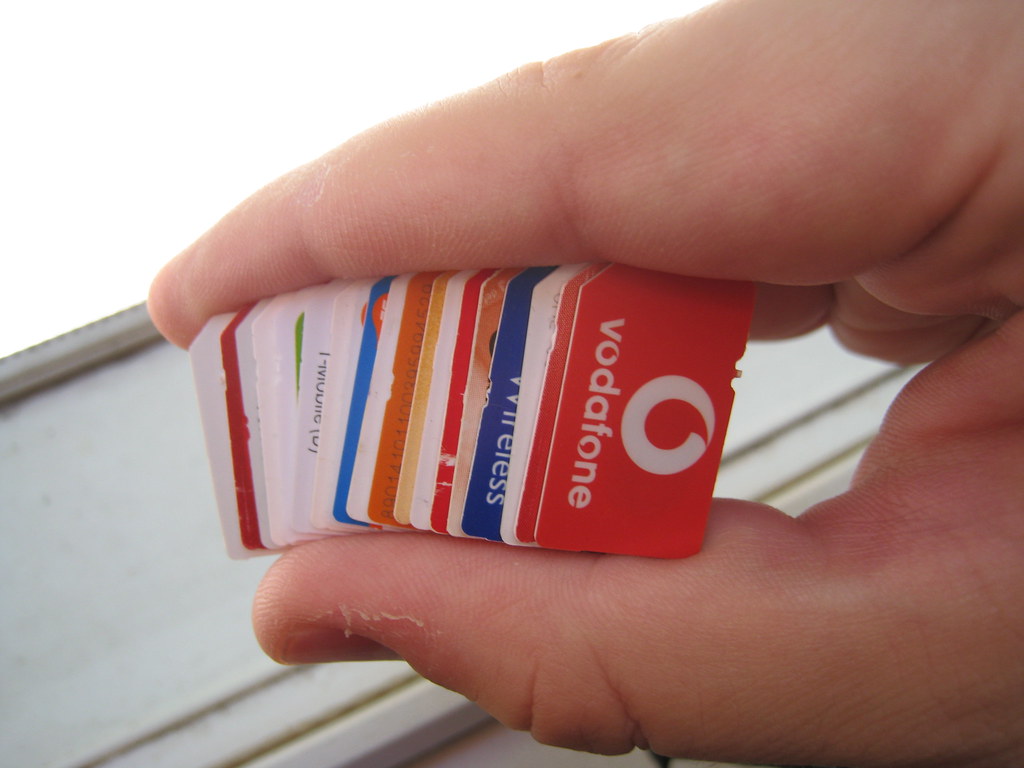
The commonest verdict is that the handset is locked to an American carrier and needs unlocking. Next in popularity: the firmware is to blame, or the "wrong region" in the settings. Both start from the idea that a frequency is something like a language — the device does not know it yet, but it can be taught. What is actually missing cannot be taught. It is soldered to the board.
A band is two stretches of spectrum, not one
Operating bands are listed in table 5.5-1 of 3GPP TS 36.101 (that is LTE) and in table 5.2-1 of TS 38.101-1 (5G in the FR1 range). Each row carries two columns, and each column is named without ambiguity. The first is the one the phone transmits in and the base station listens in; the standard heads it "Uplink (UL) operating band: BS receive / UE transmit". The second is the one the station transmits in and the phone listens in — "Downlink (DL) operating band: BS transmit / UE receive". A single row of the table describes not one stretch of spectrum but two, and each of them has its own assigned role.
The row for band 20: the phone transmits on 832–862 MHz and receives on 791–821 MHz. That order of numbers is worth reading twice. Transmit here sits above receive, which is unusual: in band 1 transmit is 1920–1980 and receive 2110–2170; in band 3, 1710–1785 and 1805–1880; in the American "850", which is band 5, 824–849 and 869–894. Receive is on top everywhere.
What of it is allowed in Ukraine
The plan for the allocation and use of the radio-frequency spectrum, approved by Cabinet of Ministers resolution No. 1340 of 19 December 2023, contains in its section on radio technologies in service a row 22 for international mobile telecommunications, IMT, technology LTE. Two of the positions written out for it are low-band: 703 – 733 MHz with 758 – 788 MHz, and 791 – 801 MHz with 832 – 842 MHz. Both carry the note that they are paired.
Lay the second pair over the band 20 row from the standard. 791–801 falls inside 791–821, and 832–842 inside 832–862. Ukrainian LTE 800 is band 20, reversed order and all. In TS 38.101-1, band n20 is written with the same figures, so nothing changes for 5G.
The minus sign in the separation table
TS 36.101 has one further column, and it gathers up what the previous one leaves you to work out for yourself: how far one half of the pair stands from the other. Its heading reads "Default UE TX-RX frequency separation". Here are four of its rows, and what to look at is the sign.
| Band | Separation |
|---|---|
| 5 — North America, 850 | 45 MHz |
| 20 — Europe and Ukraine, 800 | −41 MHz |
| 28 — 700, Ukraine among others | 55 MHz |
| 71 — North America, 600 | −46 MHz |
The minus is not an error. It marks the same reversed order that shows in table 5.5-1, and it yields the number worth stopping at: in bands 5 and 20 the distance between the halves is nearly identical — forty-five megahertz against forty-one — and the direction is opposite. The difference lies in the sign, not in the magnitude.
Incidentally, band 20 is no European oddity here. A minus sign in that same column belongs to North American band 13 as well, and to its neighbour 14.
The transmitter hits the target, the receiver does not
Band 5 transmits in the range 824–849 MHz. A Ukrainian network on band 20 expects the phone to transmit on 832–842 — which sits wholly inside 824–849. The transmit chain of an American handset physically covers the very frequencies it is expected on.
What fails is the other arm. The receive window paired with that transmitter is 869–894 MHz, while a band 20 base station transmits on 791–801. The gap comes out like this: 869 − 801 = 68 MHz.
Why firmware is powerless here
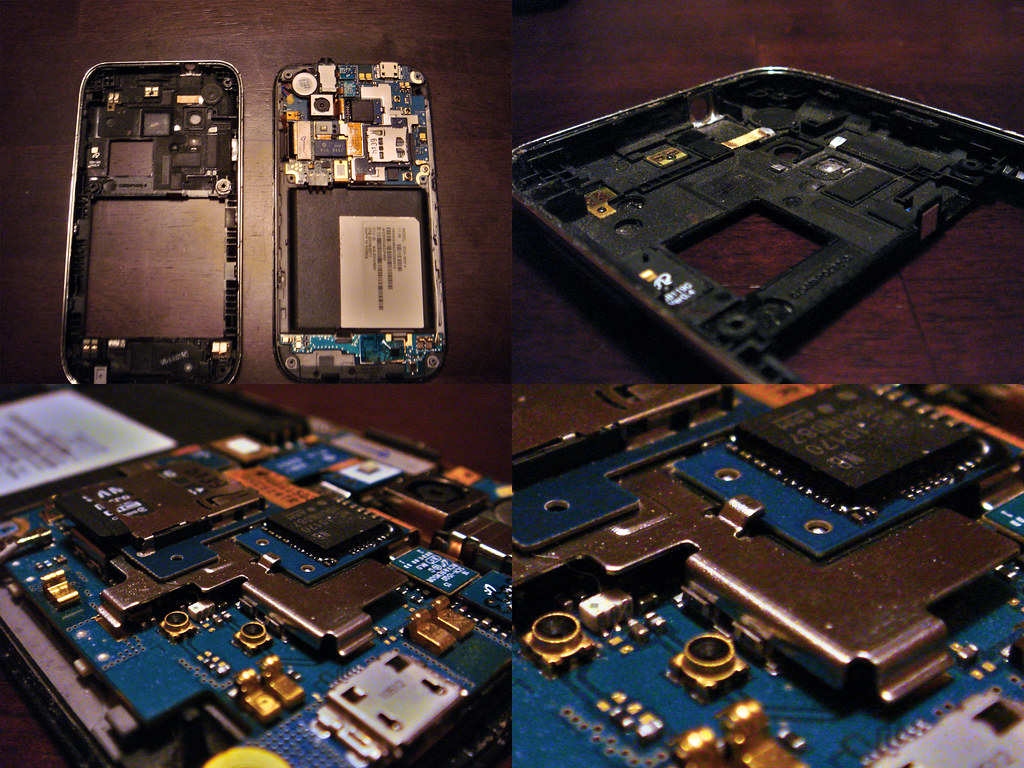
The part that embodies this order is called a duplexer: two band-pass filters in one package, tuned to a particular pair of frequencies and to a particular arrangement of the halves. It is passive. A passband cannot be shifted by a command, and the halves cannot be swapped.
That is where the futility of "unlocking" and of changing the region comes from: both work with what is written in the handset's memory, not with what is soldered into the radio-frequency front end.
When there is no second half
A pair is not always needed. The third position in that same row of the plan is 3400–3800 MHz. It has no second half, and no note about pairing either. Table 5.2-1 of TS 38.101-1 explains why: band n78 (3300–3800 MHz) works in TDD, where transmit and receive are separated in time rather than in frequency. One range, one filter, and the question of which half goes first never arises.
Reversed pairs are a property of bands running FDD, and they are what decides whether an imported handset will see a network on the low frequencies.
Overlapping frequencies promise nothing
If stretches of two bands overlap, the handset ought to work somehow — that is what common sense suggests. The standard answers with notes under table 5.5-1, and the answer is narrowed down to a handful of cases. The third of them reads: "NOTE 3: A UE that complies with the E-UTRA Band 65 minimum requirements in this specification shall also comply with the E-UTRA Band 1 minimum requirements". The same note is written out for band 66 with respect to band 4, and one more for band 50 with respect to band 51.
The point is that these cases had to be written out one by one. Requirements in the standard are formulated for a row of the table rather than for a frequency, and a device declares support for a row. Where no note exists, one band sitting inside another obliges nobody to anything.
At 700 MHz the story repeats, only without the grey area. The Ukrainian pair 703–733 / 758–788 lies in band 28 with a separation of 55 MHz, while the low American band 71 is 663–698 and 617–652 with a separation of −46 MHz. Reception in band 71 ends at 652 MHz; the Ukrainian one begins at 758. Nothing overlaps.
What to look at in the phone
Open "About device" and find the model number — not the trade name, but a code along the lines of SM-S928U or A2650. Manufacturers tie the band list to that code: the specification pages at Apple and Samsung are broken out by model code, separately for every region of sale. In the LTE list, look for 20 and 28; in the 5G list, for n20 and n78. If they are absent, the SIM card is off the hook.
The other half of the check is done on the network side: in the plan (link at the foot of the page) find row 22 of the section on radio technologies in service and see which pairs are written out for LTE and for IMT generally. The plan lists what is permitted, not what is deployed: how many base stations an operator has actually put up in the 800 band, and in which district, cannot be read from it.
A permitted band is not coverage
About the 791–801 / 832–842 pair, the same row of the plan says that use of these bands by the mobile service is restricted in every region of Ukraine by conditions for ensuring electromagnetic compatibility with special-purpose radio equipment. The right band list in a phone is a necessary condition, not a sufficient one: at a given spot there may be no cell on those frequencies at all.
The sources this article was written from
- The bands permitted in Ukraine for LTE and 5G, with the note that they are paired
Plan for the allocation and use of the radio-frequency spectrum in Ukraine, approved by Cabinet of Ministers resolution No. 1340 of 19.12.2023, section 2 "Radio technologies in service", row 22 — https://zakon.rada.gov.ua/laws/show/1340-2023-%D0%BF - Table of LTE operating bands (5.5-1); column headings verbatim — «Uplink (UL) operating band: BS receive / UE transmit» and «Downlink (DL) operating band: BS transmit / UE receive»
3GPP TS 36.101 V16.6.0, ATIS mirror — https://atisorg.s3.amazonaws.com/archive/3gpp-documents/Rel16/ATIS.3GPP.36.101.V1660.pdf - Table of default transmit-receive frequency separation (5.7.4-1); heading verbatim — «Default UE TX-RX frequency separation»
3GPP TS 36.101 V16.6.0, ATIS mirror — https://atisorg.s3.amazonaws.com/archive/3gpp-documents/Rel16/ATIS.3GPP.36.101.V1660.pdf - Note under table 5.5-1 verbatim — «NOTE 3: A UE that complies with the E-UTRA Band 65 minimum requirements in this specification shall also comply with the E-UTRA Band 1 minimum requirements»
3GPP TS 36.101 V16.6.0, ATIS mirror — https://atisorg.s3.amazonaws.com/archive/3gpp-documents/Rel16/ATIS.3GPP.36.101.V1660.pdf - Table of 5G NR operating bands in FR1 (5.2-1)
3GPP TS 38.101-1 V16.4.0, ATIS mirror — https://atisorg.s3.amazonaws.com/archive/3gpp-documents/Rel16/ATIS.3GPP.38.101-1.V1640.pdf