Why does a vitamin jar say “supports” and never “treats”?
The vague wording on the package is not a marketer being careful. The European directive on food supplements bans both the promise of a cure and the mere hint that ordinary food falls short; what you read on the front of the jar is what survived those two deletions.
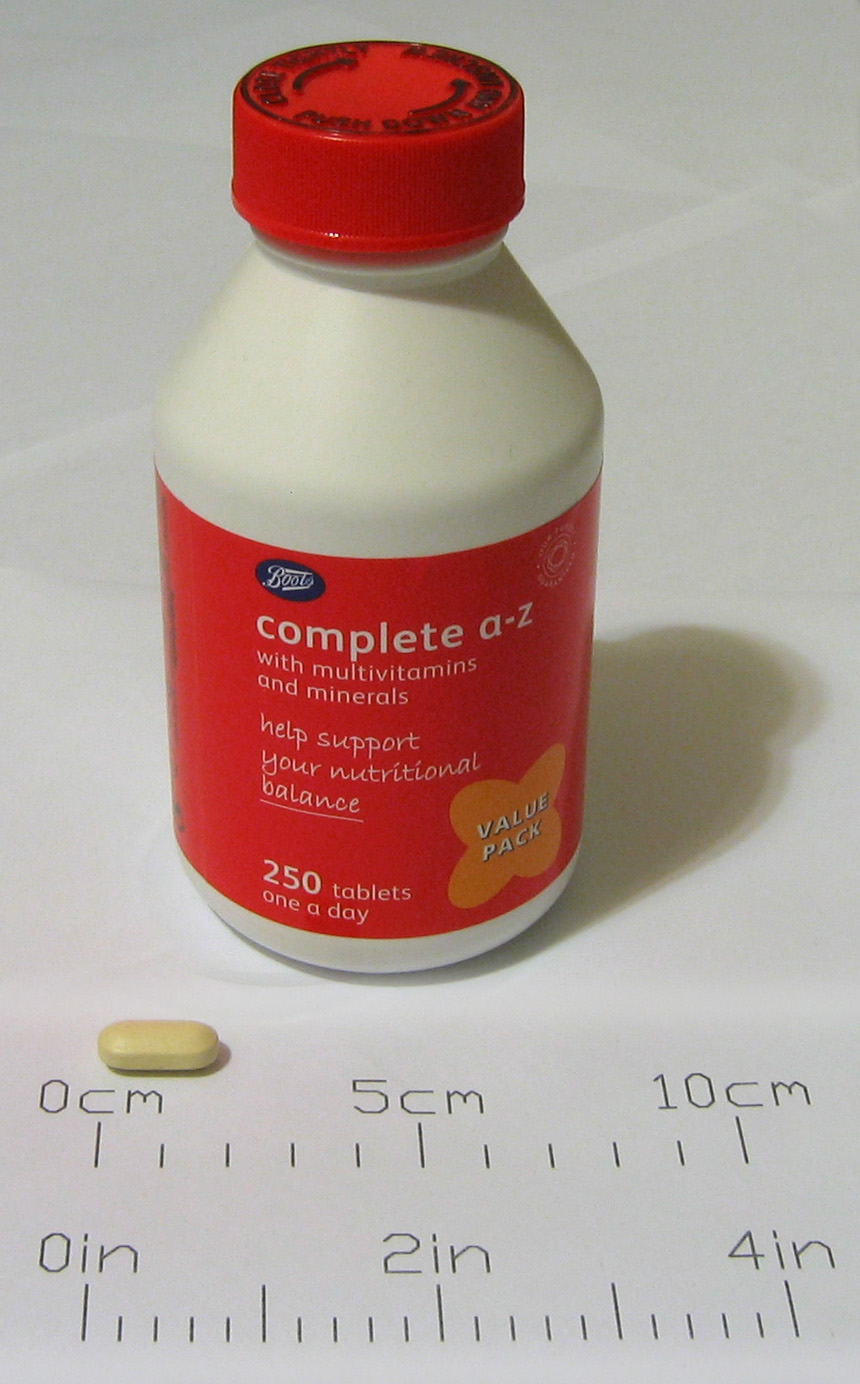
An ordinary jar of vitamins from the chemist: a month of tablets, and on the front, in large friendly type, a promise of support for your immune system. No disease is named anywhere on it. Turn the jar over and the tone changes completely: a column of substances with numbers beside them, a percentage next to each, a line telling you not to exceed the stated dose, and a flat little sentence saying that supplements are no substitute for a varied diet.
The obvious reading offers itself. "Supports" is a marketer declining to over-promise, and the sentence about diet was added by the company's lawyers so nobody could sue, printed small enough to skip. Two departments inside one company, two separate motives, and nothing imposed from outside.
Neither is true. Both lines are on that jar because of a single document written outside the company: one sentence it compels the manufacturer to print, and the stronger words it simply takes away from the seller.
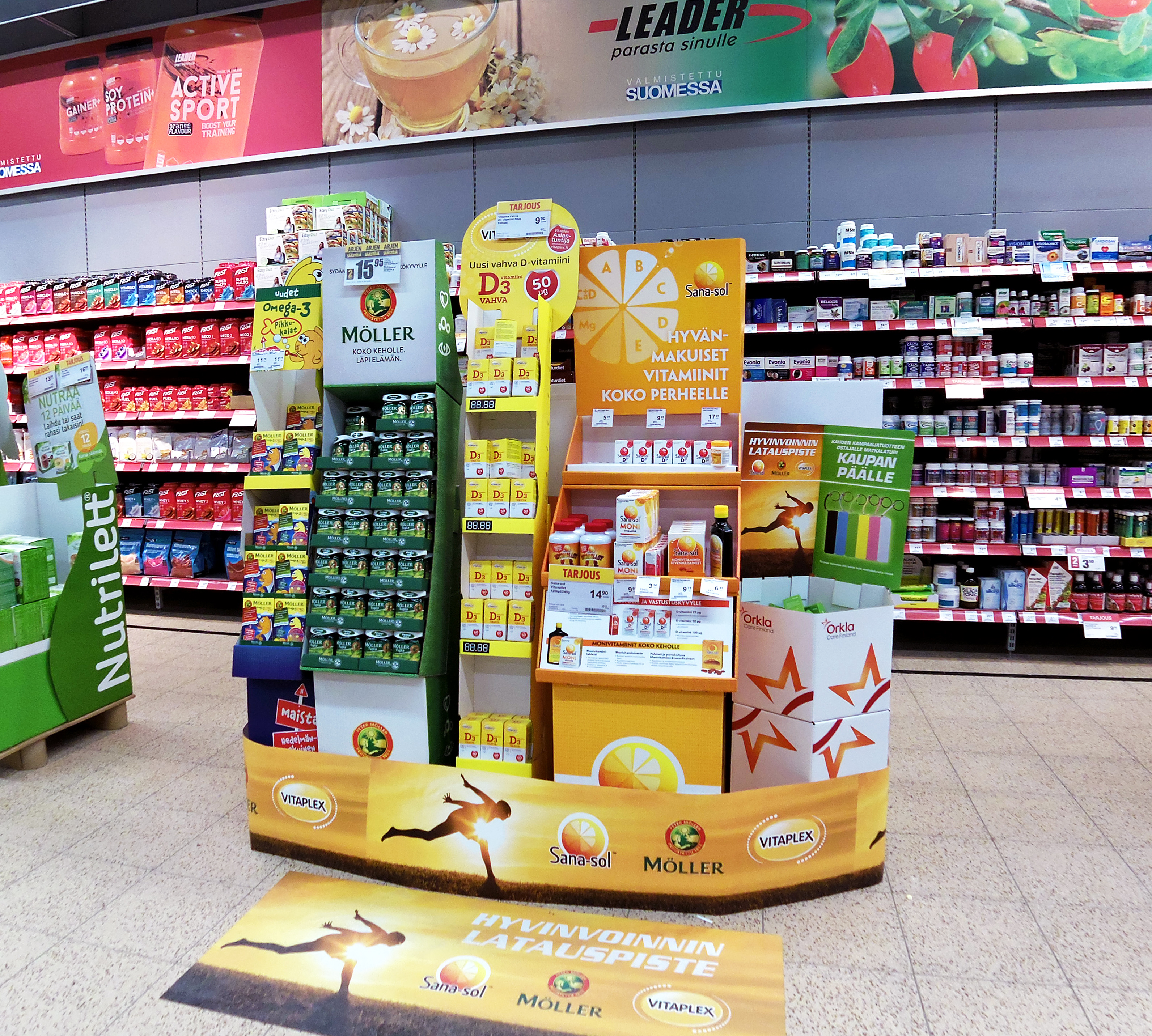
The label is built out of prohibitions
Food supplements across the EU are governed by Directive 2002/46/EC. Most of what it does to a label is not to add information but to take options away.
What must appear is set out in Article 6(3). The names of the categories of nutrients present. The portion recommended for daily consumption. A warning not to exceed that portion. Instructions to keep the product out of the reach of young children. And the sentence you dismissed — a statement that supplements should not be used as a substitute for a varied diet.
Then the strongest claim a seller could make is taken away, by Article 6(2):
The labelling, presentation and advertising must not attribute to food supplements the property of preventing, treating or curing a human disease, or refer to such properties.
That one is intuitive enough. If a product treats a disease it is a medicine, and medicines are approved on evidence rather than sold on a shelf beside the tea.
One paragraph long, Article 7 follows straight after 6(2):
The labelling, presentation and advertising of food supplements shall not include any mention stating or implying that a balanced and varied diet cannot provide appropriate quantities of nutrients in general.
The ban is therefore wider than curing. It covers implying that ordinary food is insufficient — which is, stated plainly, the premise the entire category is marketed on. You cannot say it outright. Nor can you hint.
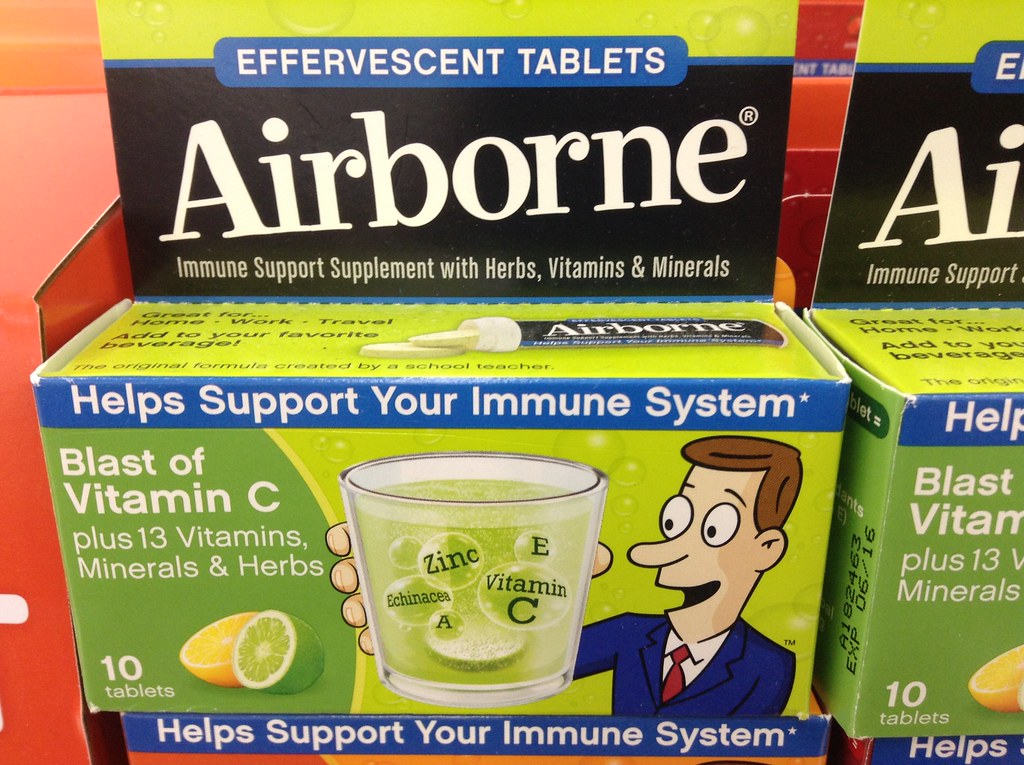
This is why supplement packaging talks the way it does. "Supports", "contributes to", "for those with an active lifestyle" — that vocabulary is not vagueness for its own sake. It is what remains after Articles 6(2) and 7 have removed everything stronger.
The numbers are specified too, down to what they are counted against
The column of figures on the back is not the manufacturer's choice of format. Article 8(1) requires the amount of each nutrient to be declared "in numerical form" — not "rich in", not "high strength", a number. The units for vitamins and minerals are fixed in Annex I of the directive, so milligrams and micrograms mean the same thing on every jar in the union.
Every number needs a denominator, and Article 8(2) fixes it: the declared amounts are those "per portion of the product as recommended for daily consumption". So the figure beside each substance refers to the dose the manufacturer itself recommends — not to a tablet, a gram or a jar. Without a stated portion the numbers would mean nothing, which is why the portion sits in the list of mandatory particulars as well.
The third requirement is the percentage. Under Article 8(3), information on vitamins and minerals must also be "expressed as a percentage of the reference values" — the same reference figures used in ordinary nutrition labelling.
Three requirements, and together they do something specific: they make two different jars comparable. A number in fixed units, counted per a stated dose, and expressed against a shared reference. Remove any one of the three and the comparison quietly stops working.
The smallest print on the pack
Start with the sales name. Article 6(1) requires this kind of product to be sold under the name "food supplement", and those two words — rather than the word "vitamins" on the front — tell you which rulebook shaped everything else on the jar.
Then look for the five mandatory items from Article 6(3). They are usually printed together in the smallest type on the package, and once you know they are compulsory they become easy to find.
Next, check the percentage. If a substance shows a quantity but no percentage of the reference value, either it is not a vitamin or mineral covered by that rule, or the label is incomplete — and an incomplete label is a reasonable signal about the seller.
Finally, read the front of the package again, this time looking for what is absent. No disease is named. Nothing tells you your diet is failing you. That absence is not modesty on the manufacturer's part; it is Articles 6(2) and 7 doing their work, and it is the same on every compliant jar on the shelf.
The label promises no result
The directive shapes the label, not the contents. Nothing in Articles 6 to 8 says a supplement works, and nothing in them says a given dose is right for you. A jar can satisfy every requirement here and still be of no use to the person who bought it.
The numbers have a provenance too, and Article 9(1) states it: the declared values are average values based on the manufacturer's own analysis of the product. Not a measurement of the jar in your hand. The same paragraph acknowledges that declared values and the values found by official checks can differ, and leaves that difference to implementing rules — so the possibility is written into the document itself.
The percentage deserves particular caution. A reference value is a figure set for a population, not a target calculated for you, so "100% of the reference value" does not mean "the amount you personally need" — it means the amount a labelling standard uses as its yardstick. What that yardstick is built from, and why the EU and the US arrive at different numbers for the same vitamin, is a separate question with a separate set of documents behind it.
And the directive leaves some room deliberately. It sets what the label must and must not say; a number of practical details are left to national rules, so two compliant jars bought in different member states differ in what else appears on them.
The sources this article was written from
- Directive 2002/46/EC, Article 6 — the sales name, the ban on medicinal claims and the five mandatory particulars. Verbatim: 6(1) «the name under which products covered by this Directive are sold shall be "food supplement"»; 6(2) «The labelling, presentation and advertising must not attribute to food supplements the property of preventing, treating or curing a human disease, or refer to such properties»; 6(3) «(a) the names of the categories of nutrients or substances that characterise the product or an indication of the nature of those nutrients or substances; (b) the portion of the product recommended for daily consumption; (c) a warning not to exceed the stated recommended daily dose; (d) a statement to the effect that food supplements should not be used as a substitute for a varied diet; (e) a statement to the effect that the products should be stored out of the reach of young children»
Directive 2002/46/EC — https://eur-lex.europa.eu/legal-content/EN/TXT/HTML/?uri=CELEX:32002L0046 - Directive 2002/46/EC, Article 7 — the ban on stating and on implying. Verbatim: «The labelling, presentation and advertising of food supplements shall not include any mention stating or implying that a balanced and varied diet cannot provide appropriate quantities of nutrients in general»
Directive 2002/46/EC — https://eur-lex.europa.eu/legal-content/EN/TXT/HTML/?uri=CELEX:32002L0046 - Directive 2002/46/EC, Article 8 — the form the numbers must take. Verbatim: 8(1) «The amount of the nutrients or substances with a nutritional or physiological effect present in the product shall be declared on the labelling in numerical form. The units to be used for vitamins and minerals shall be those specified in Annex I»; 8(2) «The amounts of the nutrients or other substances declared shall be those per portion of the product as recommended for daily consumption on the labelling»; 8(3) «Information on vitamins and minerals shall also be expressed as a percentage of the reference values mentioned, as the case may be, in the Annex to Directive 90/496/EEC»
Directive 2002/46/EC — https://eur-lex.europa.eu/legal-content/EN/TXT/HTML/?uri=CELEX:32002L0046 - Directive 2002/46/EC, Article 9(1) — where the declared values come from. Verbatim: «The declared values mentioned in Article 8(1) and (2) shall be average values based on the manufacturer's analysis of the product. Further rules for implementing this paragraph with regard in particular to the differences between the declared values and those established in the course of official checks shall be decided upon in accordance with the procedure referred to in Article 13(2)»
Directive 2002/46/EC — https://eur-lex.europa.eu/legal-content/EN/TXT/HTML/?uri=CELEX:32002L0046