Why doesn't 5 GHz Wi-Fi reach the far room?
A router hands out two networks: one is faster, the other reaches further. The speed comes from how much free spectrum the 5 GHz band happened to get. The wall penalty comes from one exponent in an ITU table — and for brick that exponent is almost zero, which is why the usual rule of thumb fails in a brick house.
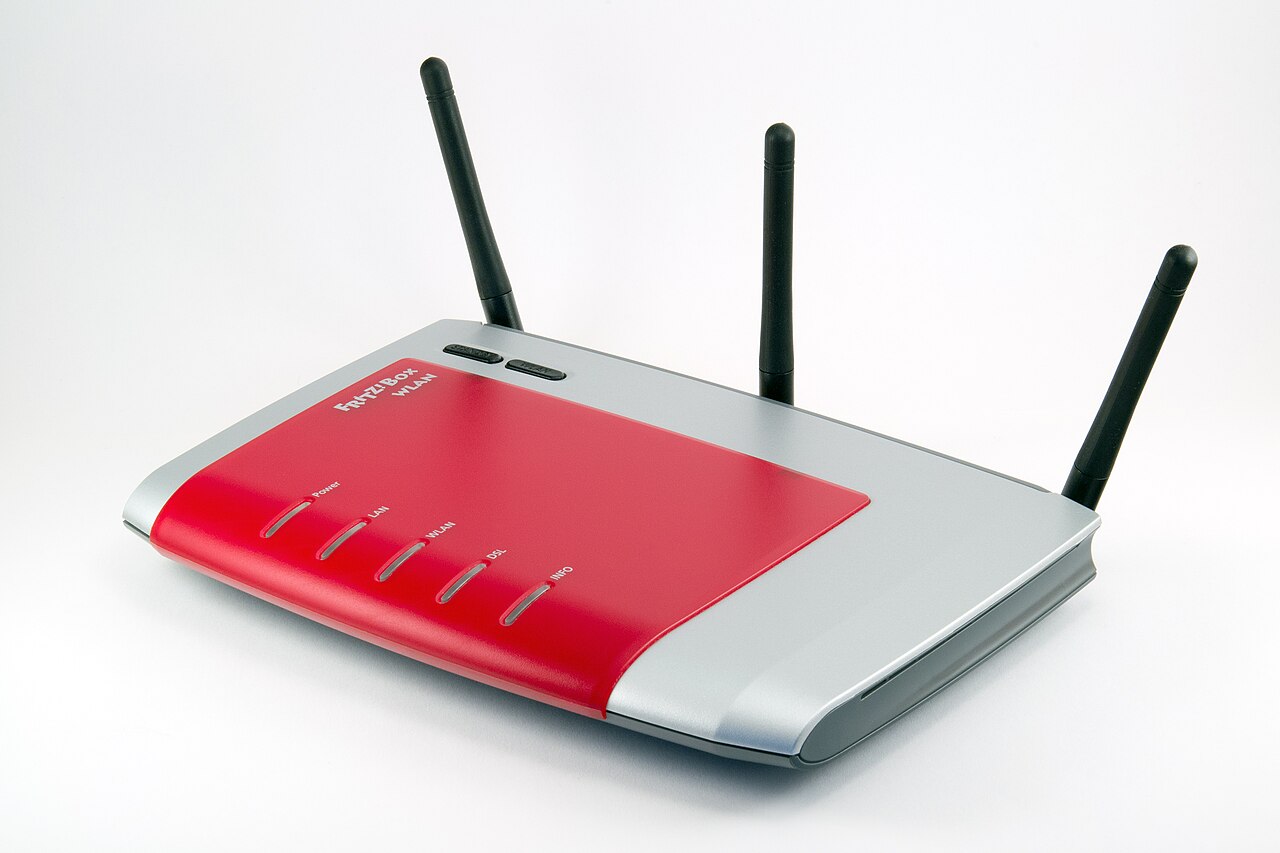
A router sits in the living room, a laptop on the same table, no wall between them. The Wi-Fi list shows two entries with the same name, and the one on 5 GHz connects at a rate the other never reaches. Carry the laptop to the far bedroom, past two walls, and the order reverses. The fast network goes faint or vanishes from the list, and the slow one is the one still carrying traffic.
The usual account of this is that 5 GHz is simply the weaker signal — that a shorter wave has less push behind it and gets stopped by solid objects, while a longer one shoulders through. Put that way it is a single property with a single direction: higher frequency, worse penetration, everywhere, by roughly the same amount.
The two things you observed do not come from one property. They come from two documents that do not mention each other, and only one of them has anything to do with the wall.
Speed is a question of how much room there was
The harmonised standard for 2.4 GHz equipment, ETSI EN 300 328, lists exactly one entry in its table of service frequency bands: 2 400 MHz to 2 483.5 MHz. Subtract, and the whole band is 83.5 MHz wide — for every device in it, everywhere in Europe.
EN 301 893, which covers the 5 GHz equivalent, lists two: 5 150 MHz to 5 350 MHz, and 5 470 MHz to 5 725 MHz. 200 + 255 = 455 MHz, or 455 ÷ 83.5 = 5.4 times as much room.
Room is what a fast link is built from. EN 301 893 sets the grid in clause 4.2.1.3 — fc = 5 160 + (g × 20) MHz, with g running from 0 to 9 and then from 16 to 27, which is twenty-two channels of 20 MHz — and then lets a device hold several of them at once. The standard puts it without softening: transmissions in adjacent channels may be counted as one signal whose bandwidth is the bandwidth of a single channel multiplied by the number of those channels. The channel-access clause names the sizes it expects, too — bonded channels of 40, 80 and 160 MHz.
A 160 MHz channel does not go into 83.5 MHz of band. The widest configuration EN 300 328 ever illustrates is 40 MHz, and even that takes up half of everything there is. So the higher frequency is not faster because it is higher. It is faster because that is where the empty spectrum happened to be.
What actually changes inside the wall
Walls are described in a different document. A propagation recommendation, ITU-R P.2040-4, consists entirely of what building materials do to radio waves. Its model for a solid material is two lines: the real part of the relative permittivity is ε′r = a f^b, the conductivity is σ = c f^d, with f in gigahertz. Table 3 supplies a, b, c and d per material class.
The interesting column is b. For every building material in that table — concrete, brick, plasterboard, wood, glass, chipboard, marble, plywood — b is zero, and the recommendation explains at once what follows: the value is then simply the coefficient a or c, and does not depend on frequency at all. Permittivity does not move. About conductivity it says the opposite: in the band of interest it is a strong function of frequency, and it rises with frequency.
That leaves the entire frequency effect sitting in one exponent, d. And the attenuation rate follows in a single step, by equation (27a): A = 1 636 σ / √ε′ decibels per metre.
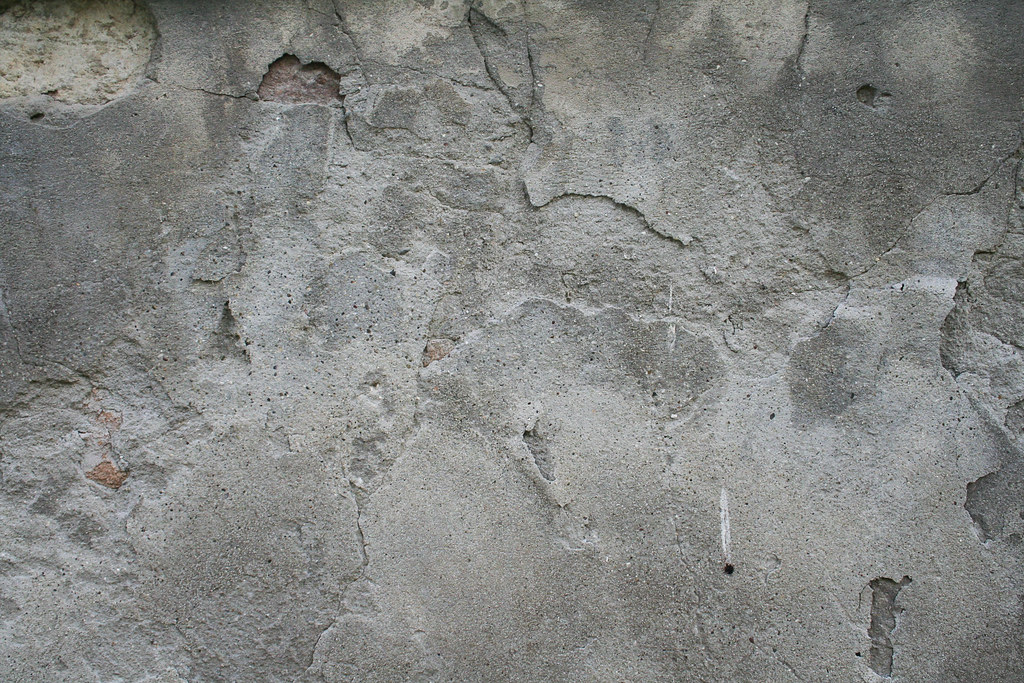
Concrete has a = 5.24, c = 0.0462, d = 0.7822. At 2.4 GHz that is 1 636 × 0.0462 × 2.4^0.7822 ÷ √5.24 = 65.5 dB/m. At 5 GHz, same line, one number changed: 1 636 × 0.0462 × 5^0.7822 ÷ √5.24 = 116.3 dB/m. A metre of the same concrete costs 51 decibels more at the higher frequency, and nothing about the concrete changed to make that happen.
Brick hardly notices
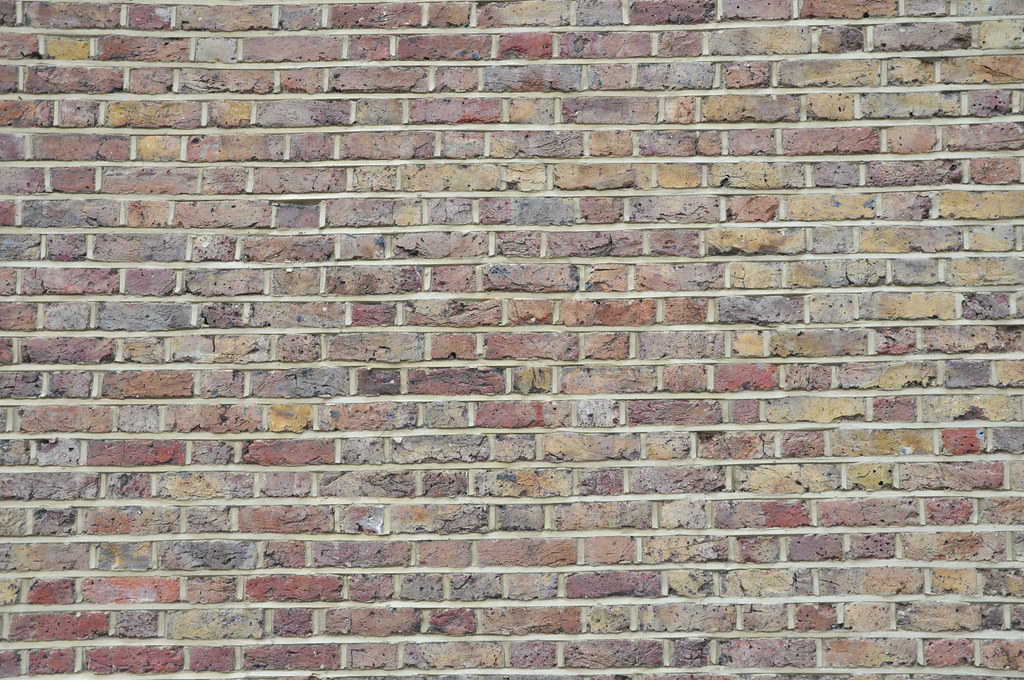
The brick row falls out of that picture. Brick's exponent is 0.16.
1 636 × 0.0238 × 2.4^0.16 ÷ √3.91 = 22.7 dB/m at 2.4 GHz, and 25.5 dB/m at 5 GHz. Doubling the frequency costs a brick wall twelve per cent. It cost the concrete wall seventy-eight.
The four materials from Table 3 you are most likely to have in a flat take that same step from 2.4 to 5 GHz like this — and the column to read is not d, but the two on the right together:
| Material | Exponent d | dB/m at 2.4 GHz | dB/m at 5 GHz | The step costs |
|---|---|---|---|---|
| Brick | 0.16 | 22.7 | 25.5 | ×1.12 |
| Concrete | 0.7822 | 65.5 | 116.3 | ×1.78 |
| Plasterboard | 0.9395 | 19.2 | 38.2 | ×1.99 |
| Glass | 1.3394 | 7.6 | 20.2 | ×2.67 |
The rightmost column rises down the table and the one beside it does not. Glass is punished hardest by the step in relative terms and remains the easiest thing to get through, because it starts at 7.6: the twenty decibels per metre it reaches at 5 GHz are a third of what a metre of concrete takes at 2.4. Concrete has a middling exponent and ends the conversation at either frequency. Which of your walls the router is behind matters more than which band it is on.
Wood sits in the same row of figures at ×2.20, between plasterboard and glass. So "higher frequency goes through walls worse" is not a claim about frequency at all. It is a claim about d, and d belongs to the material.
The width setting is one field on the router page
Every router's wireless page has a channel-width setting for its 5 GHz radio: a menu with 20, 40, 80 and sometimes 160 MHz in it. That field is the whole speed argument in one place. Left at 20 MHz, the 5 GHz radio occupies exactly as much spectrum as a 2.4 GHz one and pays the wall penalty for nothing in return.
The channel number next to it is worth a glance too. Multiply it by 5 and add 5 000: that is the centre frequency in megahertz, and it has to land on one of the values from fc = 5 160 + (g × 20). Channel 36 gives 5 180 MHz, which is g = 1. Channel 100 gives 5 500 MHz, g = 17, over in the upper sub-band.
The wall, meanwhile, is measured with a tape: the figures above are per metre and a wall is a fraction of one. Measure the thickness and multiply. Ten centimetres of plasterboard works out at 0.1 × 38.2 = 3.8 dB at 5 GHz and half that at 2.4 — a partition you would barely notice on either band.
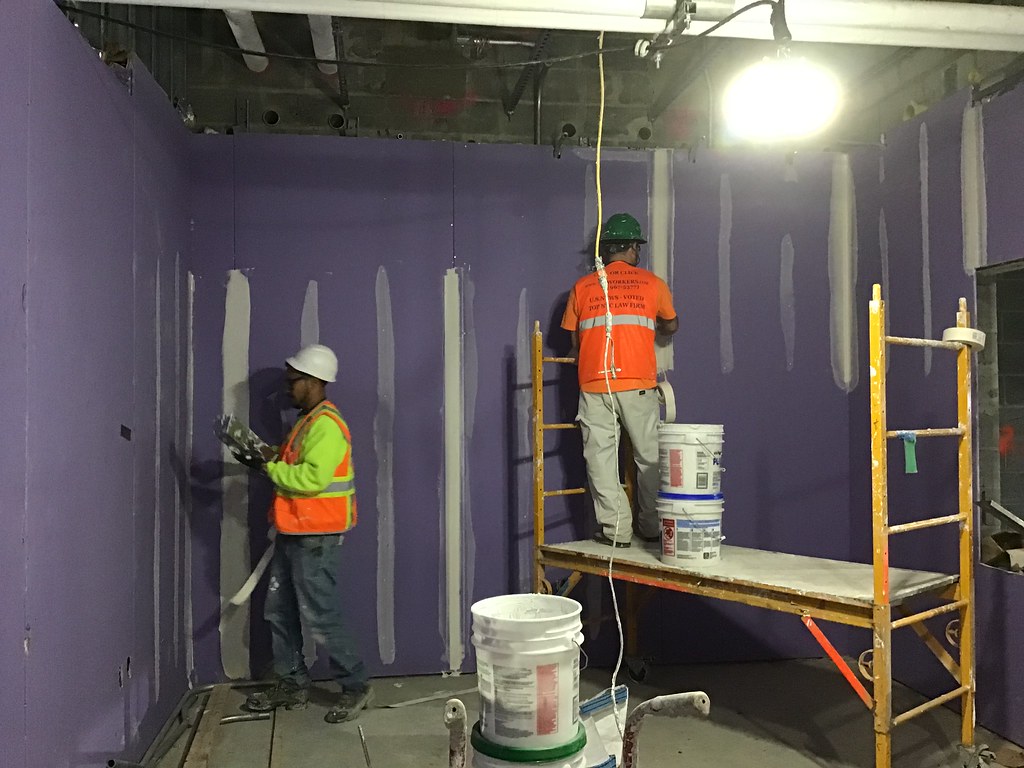
Thirty centimetres of concrete is 0.3 × 116.3 = 35 dB against 0.3 × 65.5 = 20 dB, and that gap is what decides which end of the flat has coverage.
Where Table 3 stops
P.2040-4 describes materials, not rooms. A wall is a slab with two surfaces, and some of the wave turns back at each of them before any of it is absorbed; the recommendation gives that its own section, and warns plainly what its figures leave out: free-space losses are not counted, only what happens at the interface between media. The distance between router and laptop is doing its own frequency-dependent damage, and that arithmetic is in a different recommendation entirely.
Table 3 carries a warning about itself, too: the frequency ranges printed beside each material are not hard limits but an indication of the range over which the measurements behind the model were made. And it holds one row that ends every calculation above — metal, conductivity 10⁷ S/m, permittivity 1. Foil-backed insulation and reinforcement mesh are not a dielectric case, and no exponent describes them.
The sources this article was written from
- ITU-R P.2040-4, Table 3 and equations (27a), (57), (58) — material properties and attenuation rate. Verbatim, on a zero exponent b: the value "is a or c respectively, and independent of frequency". On conductivity: it "is usually a strong function of frequency in the band of interest, increasing with frequency". On the limits of the model: the methods "take no account of free-space losses, only the effect of the media interface", and the frequency ranges beside each material "are not hard limits but are indicative of the measurements used to derive the models"
Recommendation ITU-R P.2040-4 (09/2025) — https://www.itu.int/dms_pubrec/itu-r/rec/p/R-REC-P.2040-4-202509-I!!PDF-E.pdf - ETSI EN 301 893 V2.1.1, table 1 and clauses 4.2.1.3, 4.2.2, 4.2.7.3.2.3 — 5 GHz bands and bonded channels. Verbatim: adjacent channels "may be considered as one signal with an actual Nominal Channel Bandwidth of 'n' times the individual Nominal Channel Bandwidth where 'n' is the number of adjacent channels", and the sizes are "bonded 40 MHz, 80 MHz or 160 MHz channels"
ETSI EN 301 893 V2.1.1 (2017-05) — https://www.etsi.org/deliver/etsi_en/301800_301899/301893/02.01.01_60/en_301893v020101p.pdf - ETSI EN 300 328 V2.2.2, table 1 — the 2.4 GHz service frequency band
ETSI EN 300 328 V2.2.2 (2019-07) — https://www.etsi.org/deliver/etsi_en/300300_300399/300328/02.02.02_60/en_300328v020202p.pdf