Who checks a device before the CE mark goes on it?
The mark is affixed by the manufacturer itself, and no European institution looks at the product beforehand. Whether an outside body is involved at all is decided by one condition in the directive — whether the maker took a published harmonised standard. The casing will not tell you which way that went; the declaration in the box will.
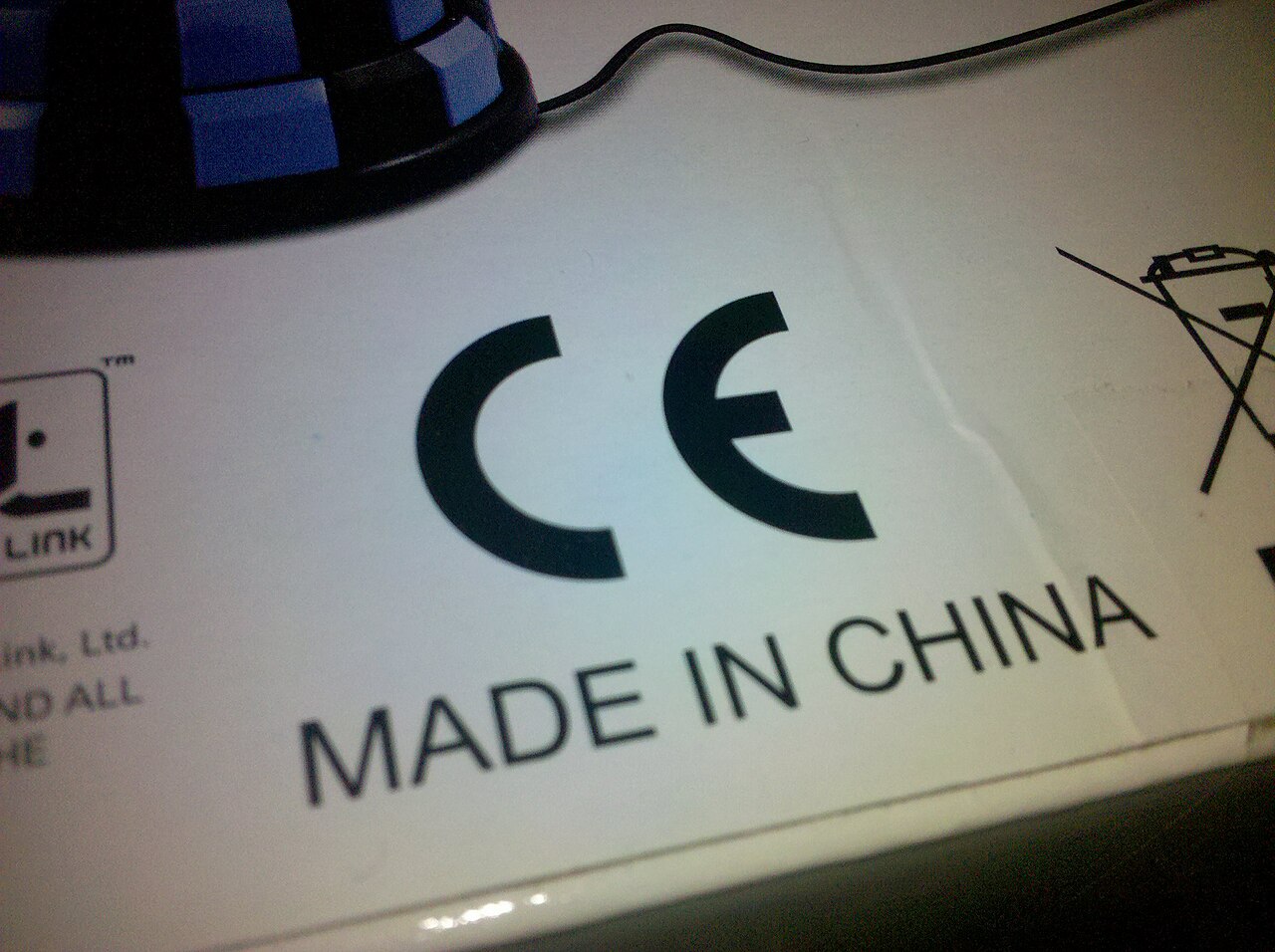
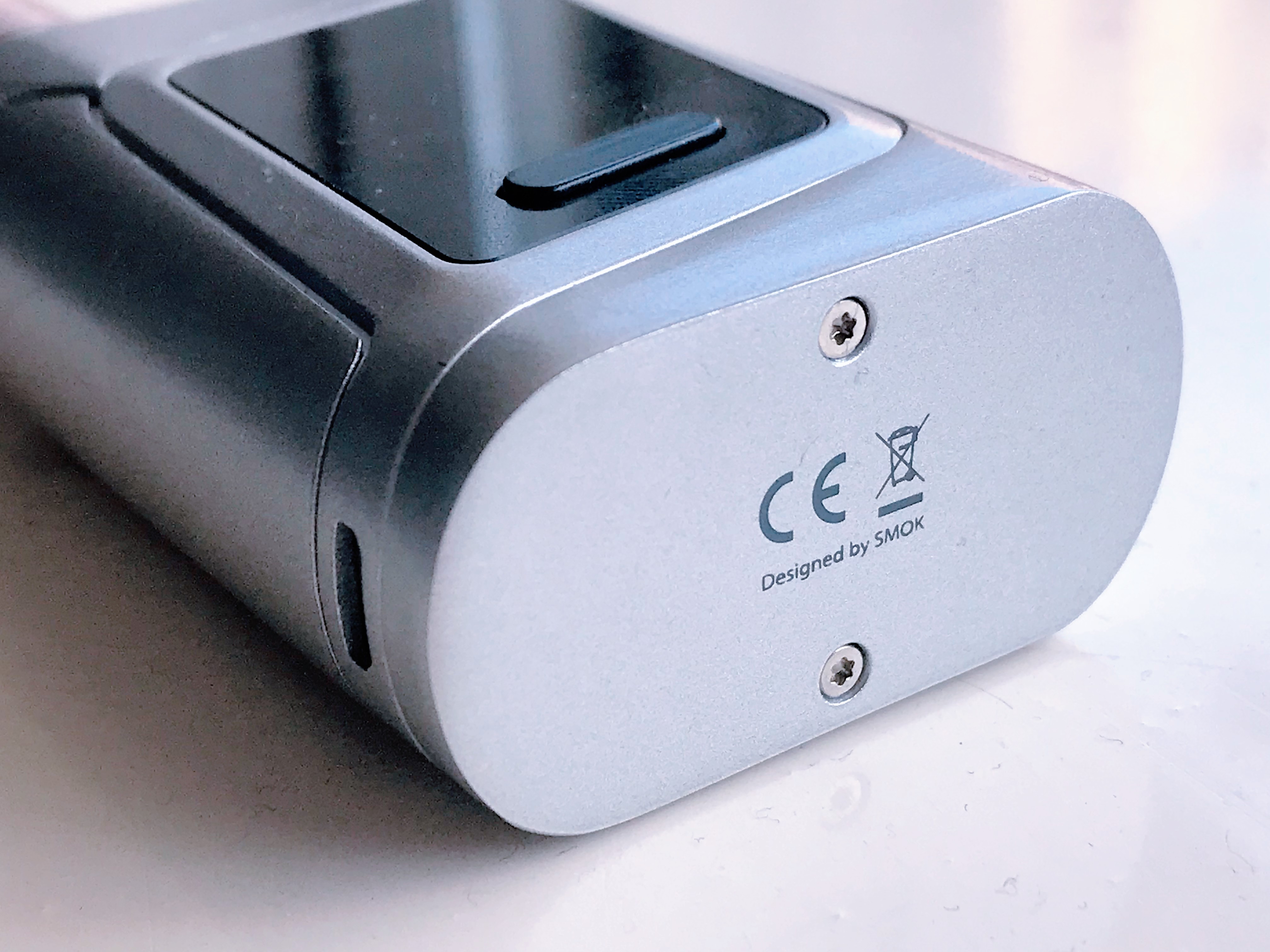
A wireless keyboard and a Wi-Fi router, unpacked on the same desk. On the underside of the keyboard the CE mark sits beside the model number, and nothing follows it. On the router's label the same mark is followed by a figure at exactly its height. Both were sold legally, in the same country, the same month.
The natural reading is that somebody in Europe looked at both products before they reached a shelf, and that the figure names whoever did the looking on the router. Part of that is right. The part about looking is not, and once it comes apart the mark stops meaning what it is usually taken to mean.

The mark has exactly one author
No European institution issues the CE letters, and none approves a product before they go on. The general rules for the mark are handed by Article 19(1) of Directive 2014/53/EU to Article 30 of Regulation (EC) No 765/2008, whose first paragraph settles authorship: the marking "shall be affixed only by the manufacturer or his authorised representative". The third settles what affixing means — the manufacturer thereby "indicates that he takes responsibility for the conformity of the product with all applicable requirements".
That word keeps coming back wherever the directive gets specific. The declaration standing behind the marking is, in the model form of Annex VI, "issued under the sole responsibility of the manufacturer". Annex II, the lightest of the assessment procedures, describes a manufacturer who "ensures and declares on his sole responsibility". Responsibility is what the text keeps promising. Verification is not.
Three procedures, and mostly a free choice
Everything that has to happen before the letters go on is set out in Article 17, and it turns on which group of essential requirements is assessed. There are three routes. Annex II is internal production control: the manufacturer compiles a technical file, keeps production in line with it, and declares. Annex III is EU-type examination by a notified body, followed by production control that is again internal. Annex IV is full quality assurance, where a notified body assesses and then audits the maker's quality system.
For the requirements in Article 3(1) — protection of health and safety, and electromagnetic compatibility — Article 17(2) offers all three with no condition attached. A company that would rather keep outsiders out of the safety assessment of its own product picks Annex II and owes nobody an explanation.
Only the spectrum requirements of Article 3(2) and (3) can take the choice away, and a single condition does it. To a manufacturer that has applied the harmonised standards published in the Official Journal, Article 17(3) leaves all three routes open. For one that "has not applied or has applied only in part" those standards, or that works where no such standard exists, Article 17(4) closes two of the three: what remains is Annex III or Annex IV, and both bring in a notified body.
The trigger is not the kind of device, nor how much radio it puts into the air. It is a documentary decision taken inside the company. Follow the published standard and the light route stays open; depart from it and an outside body becomes compulsory.
Paper, not a specimen
Suppose a manufacturer does land under Article 17(4) and takes its design to a notified body. Annex III describes what happens next, and point 2 of Module B is unusually blunt about it:
EU-type examination shall be carried out by assessment of the adequacy of the technical design of the radio equipment through examination of the technical documentation and supporting evidence referred to in point 3, without examination of a specimen (design type).
— Directive 2014/53/EU, Annex III, Module B, point 2
"Without examination of a specimen" is the edge of this procedure. Under the module the body reads a file; the directive does not ask it to switch anything on.
The contents of that file matter just as much. Point 3(d) requires supporting evidence for the design solution, and where tests are needed they are "carried out ... by the appropriate laboratory of the manufacturer, or by another testing laboratory on his behalf and under his responsibility". Under point 5 the body writes an evaluation report, which it "shall release ... in full or in part, only with the agreement of the manufacturer".
The extra figure is narrower than it looks
When a number joins the letters is stated in Article 20(3): "The CE marking shall be followed by the identification number of the notified body where the conformity assessment procedure set out in Annex IV is applied." Annex IV, and nothing besides. The same paragraph sets that number at the same height as the marking, which is why it reads as part of the mark.
Two of the three procedures involve a notified body, and only one of those two leaves a visible trace. Bare letters are therefore as consistent with Annex II as with a full EU-type examination under Annex III; what they rule out is Annex IV, and only that.
The figure on the router, in turn, says something definite and narrow: a notified body approved that maker's quality system, visited its premises under point 3.3, and can drop in unannounced under point 4.4 to run tests. About that particular design it says nothing.
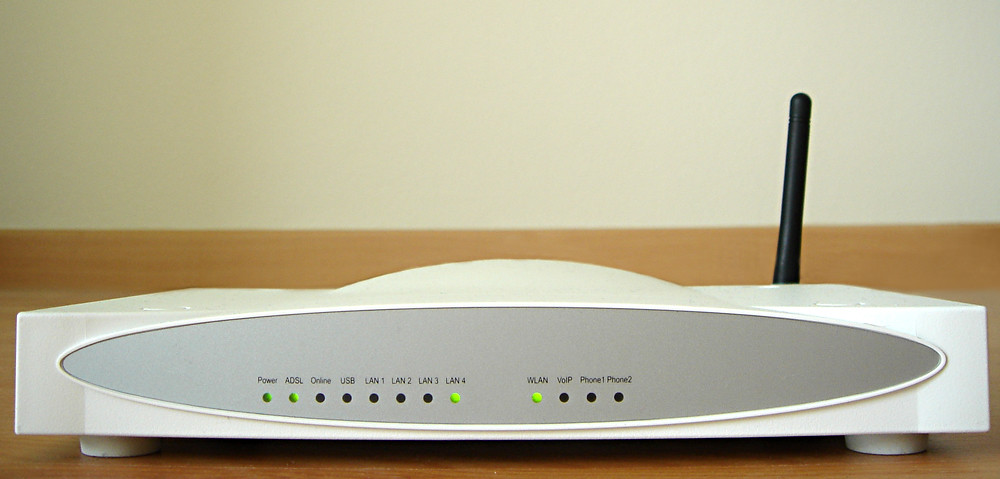
Size misleads separately. Point 3 of Annex II to Regulation 765/2008 puts a floor of 5 mm under the mark where specific legislation is silent about dimensions, and the radio directive is not silent: Article 19(2) allows marking below 5 mm if it stays visible and legible. The letters you are squinting at are the legal size.
The declaration rides along in the box
One obligation here puts a document straight into a buyer's hands. Under Article 10(9) every item of radio equipment must be accompanied by the EU declaration of conformity or by a simplified one, and a simplified declaration "shall contain the exact internet address where the full text of the EU declaration of conformity can be obtained". That flat sentence in the multilingual leaflet, with a URL beneath it, is the document; Annex VII gives its wording.
Open the full text at that address. The model in Annex VI has nine numbered fields, two of which answer what the casing cannot. Field 6 lists the harmonised standards relied on, by identification number and version — the thing that separates Article 17(3) from Article 17(4). Field 7 is filled in only "where applicable", and it names the notified body — name and number — together with the EU-type examination certificate the body issued. A populated field 6 beside an empty field 7 is the Annex II route, written down by the maker itself.
The frequency bands the device works in and the maximum radio-frequency power transmitted in them have to be stated in the instructions for anything intentionally emitting radio waves, which is what Article 10(8) asks for.
The one lever that produces an outside test
Independent testing does exist here, and Article 21(4) is the door it comes through. Where the technical documentation fails to present enough data to show compliance, the market surveillance authority is entitled to require the manufacturer or the importer "to have a test performed by a body acceptable to the market surveillance authority at the expense of the manufacturer or the importer". The authority picks the laboratory and the company pays — after the product has been sold, on an authority's initiative and never on a buyer's.
A buyer's own way in sits in the general product safety regulation instead. Keeping a public channel open — a telephone number, an electronic address or a dedicated section of the website — is what Article 9(11) of Regulation (EU) 2023/988 obliges manufacturers to do: through it consumers submit complaints and report accidents. Investigating what arrives and keeping a register of it is then required by Article 9(12).
The marking attests conformity with the legislation providing for its affixing and nothing else, which leaves every risk it does not address outside its reach. The regulation covering that remainder defines no mark at all: Regulation (EU) 2023/988 mentions no conformity marking anywhere, asking instead, in Article 9(2), for an internal risk analysis and a technical file. An unmarked product is not an unregulated one.
The sources this article was written from
- Article 30(1): the marking "shall be affixed only by the manufacturer or his authorised representative". Article 30(3): by affixing it the manufacturer "indicates that he takes responsibility for the conformity of the product with all applicable requirements". Annex II, point 3 — the 5 mm floor
Regulation (EC) No 765/2008 — https://eur-lex.europa.eu/legal-content/EN/TXT/HTML/?uri=CELEX:32008R0765 - Articles 17(2)–(4): for the Article 3(1) requirements all three procedures with no condition; for spectrum, the light route stays open to a maker that applied the harmonised standards and closes for one that "has not applied or has applied only in part"
Directive 2014/53/EU — https://eur-lex.europa.eu/legal-content/EN/TXT/HTML/?uri=CELEX:32014L0053 - Annex III, Module B, point 2: "EU-type examination shall be carried out by assessment of the adequacy of the technical design of the radio equipment through examination of the technical documentation and supporting evidence referred to in point 3, without examination of a specimen (design type)"
Directive 2014/53/EU — https://eur-lex.europa.eu/legal-content/EN/TXT/HTML/?uri=CELEX:32014L0053 - Annex III, points 3(d) and 5: tests "carried out ... by the appropriate laboratory of the manufacturer, or by another testing laboratory on his behalf and under his responsibility"; the evaluation report is released "in full or in part, only with the agreement of the manufacturer"
Directive 2014/53/EU — https://eur-lex.europa.eu/legal-content/EN/TXT/HTML/?uri=CELEX:32014L0053 - Article 20(3): "The CE marking shall be followed by the identification number of the notified body where the conformity assessment procedure set out in Annex IV is applied". Article 19(1)–(2): authorship of the mark and the licence to go below 5 mm on radio equipment
Directive 2014/53/EU — https://eur-lex.europa.eu/legal-content/EN/TXT/HTML/?uri=CELEX:32014L0053 - Article 10(9): a simplified declaration "shall contain the exact internet address where the full text of the EU declaration of conformity can be obtained". Article 10(8): frequency bands and maximum power in the instructions. Annexes VI and VII: the nine-field model form, whose field 7 is filled in "where applicable" and names "the notified body ... (name, number) ... performed ... and issued the EU-type examination certificate"
Directive 2014/53/EU — https://eur-lex.europa.eu/legal-content/EN/TXT/HTML/?uri=CELEX:32014L0053 - Annex IV, points 3.3 and 4.4: approval of the quality system, visits to the makerʼs premises and unannounced calls
Directive 2014/53/EU — https://eur-lex.europa.eu/legal-content/EN/TXT/HTML/?uri=CELEX:32014L0053 - Article 21(4): the market surveillance authority requires the manufacturer or importer "to have a test performed by a body acceptable to the market surveillance authority at the expense of the manufacturer or the importer"
Directive 2014/53/EU — https://eur-lex.europa.eu/legal-content/EN/TXT/HTML/?uri=CELEX:32014L0053 - Articles 9(11) and 9(12): a public channel for complaints and accident reports, investigation of what arrives and a register of it. Article 9(2): internal risk analysis and technical documentation
Regulation (EU) 2023/988 — https://eur-lex.europa.eu/legal-content/EN/TXT/HTML/?uri=CELEX:32023R0988