How many more years will your phone be supported?
The clock is not started by your purchase but by the day the model stopped being supplied for sale. Five years of operating-system updates, and seven years in which the manufacturer must keep selling spare parts, are counted from that same date.
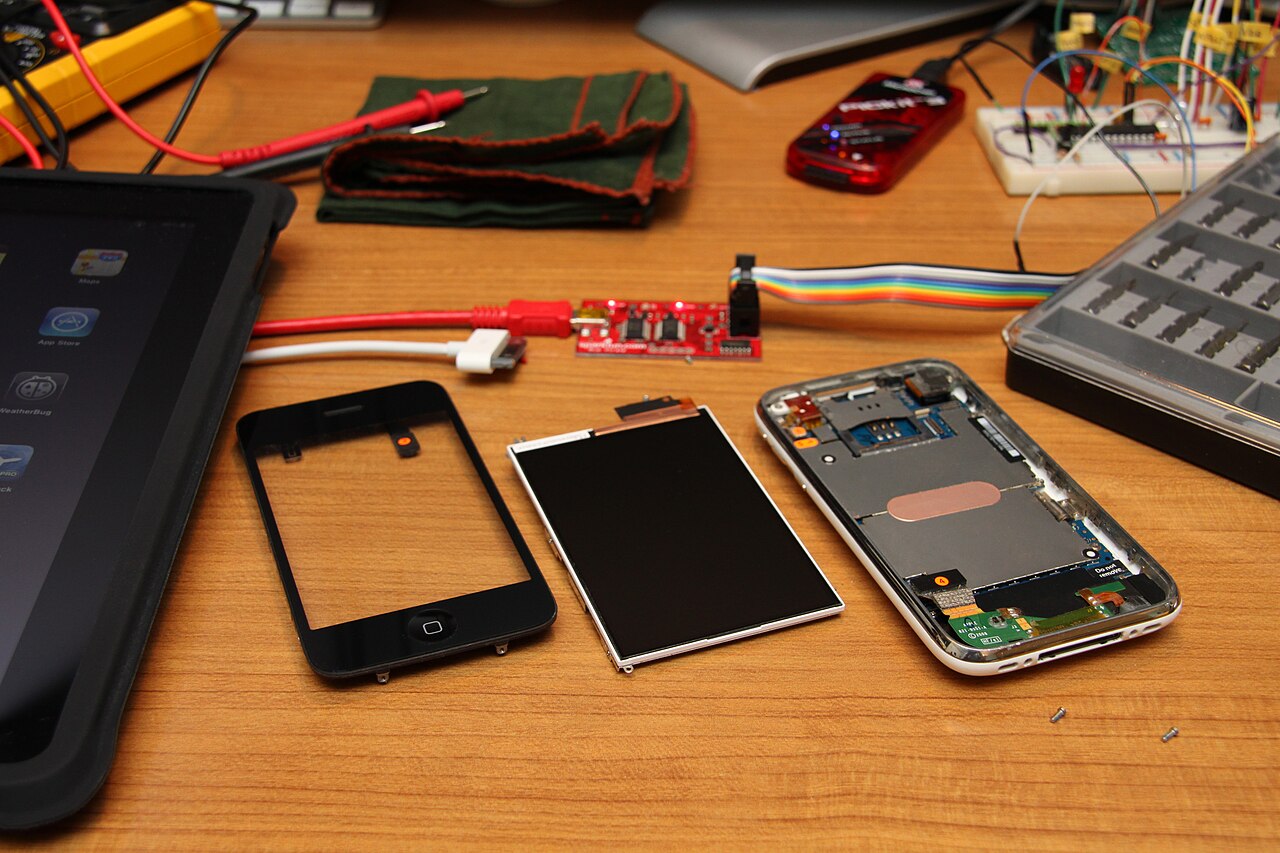
A phone bought three years ago. This spring the updates stopped arriving, and the repair shop, asked to fit a new battery, said the model was old and nobody ships parts for it any more. A colleague bought the identical handset a year earlier — and his updates kept coming for four years. Same lettering on the box, same firmware. Different amount of support.
Most explanations start from the price: how long a phone goes on being updated depends on what it cost, and spare parts stay on sale for as long as the maker feels like keeping them there. A third guess gets closer and is still wrong — that the count runs from the day of purchase, so every buyer has his own five years.
All three fail for any handset officially sold in the European Union after June 2025. Regulation (EU) 2023/1670 applies there, setting ecodesign requirements for smartphones and tablets. It puts a figure on both periods, and it names the day those figures are counted from.

One date runs everything, and it is not the day you paid
Annex II requires operating-system updates to be supplied «from the date of end of placement on the market to at least 5 years after that date». End of placement on the market is the day the manufacturer stopped supplying the model for sale. Not the announcement. Not the launch of the next generation. And certainly not the moment you handed over your card at the till.
That date belongs to the model as a whole, and it describes the manufacturer's supply rather than stock sitting in shops. How many units have already gone out to retailers, and how many of those are still boxed, the counter does not care.
Hence the gap between two identical phones. Support ends on the same day for both, because the end is tied to the model and not to a receipt; what differs is how much of the period you were there for. Bought a month before the model was withdrawn, a handset gives you almost the full five years. The same handset picked up in a clearance sale a year after the withdrawal gives four.
This changes the arithmetic of the purchase. A model just dropped from the range is not «old» — its five-year counter has only started running. A phone that has sat in a warehouse for three years has already spent that much of its allowance, sealed box or not. Part of the discount on it is paid for with support that is no longer there.
Four months for a security patch, six for a new feature
The rollout deadline is counted from a different event: the day the source code of the relevant system update was published. Security patches and bug fixes have to reach the handset «at the latest 4 months after the public release of the source code». Functionality updates are allowed «at the latest 6 months after the public release of the source code».
Nothing cosmetic hangs on that difference. Half a year late with a security patch breaks the requirement. Half a year late with a new feature does not.
Between 4 months and 6 the line falls exactly along whether the update closes a security hole. Your handset's age has no bearing on that count at all: the deadline is the same for last year's model and for one withdrawn from sale long ago.
Two conditions standing beside the deadline are what make it work. Updates are supplied «at no cost», which rules out a paid subscription to security patches. And they go «for all units of a product model with the same operating system», so nothing arrives on the expensive configuration with more memory while the cheap one waits.
That second condition is written about units, not about buyers. Once an update exists, it has to reach every handset of the model running the same system; the dearest configuration and the one off the clearance shelf get it alike.
A separate point covers what happens after the update lands. Where a functionality update has made the device slower, the manufacturer must «modify the released operating system to ensure at least the same performance as before the update within a reasonable period of time, free of charge». Slowing down after an update stopped being an annoyance and became non-compliance.
Seven years of parts, five working days to deliver
The other half of the same annex deals with hardware, and its period is longer — seven years from that same date of withdrawal from supply. Parts are split into two lists, and the boundary runs not along how hard the repair is, but along who the manufacturer is obliged to sell them to.
| Who they must be sold to | Parts |
|---|---|
| Professional repairers only | cameras, connectors, buttons, microphones, speakers, hinge, folding-screen mechanism |
| Repairers and end users alike | battery, back cover, protective film, display, charger, SIM tray |
Whether you can legally buy a display and fit it yourself is answered by the bottom row: for the parts named there the manufacturer has to sell to you, and not only to an authorised service. The top row marks where that duty ends. Nobody owes you a microphone, however competent you are with a soldering iron.
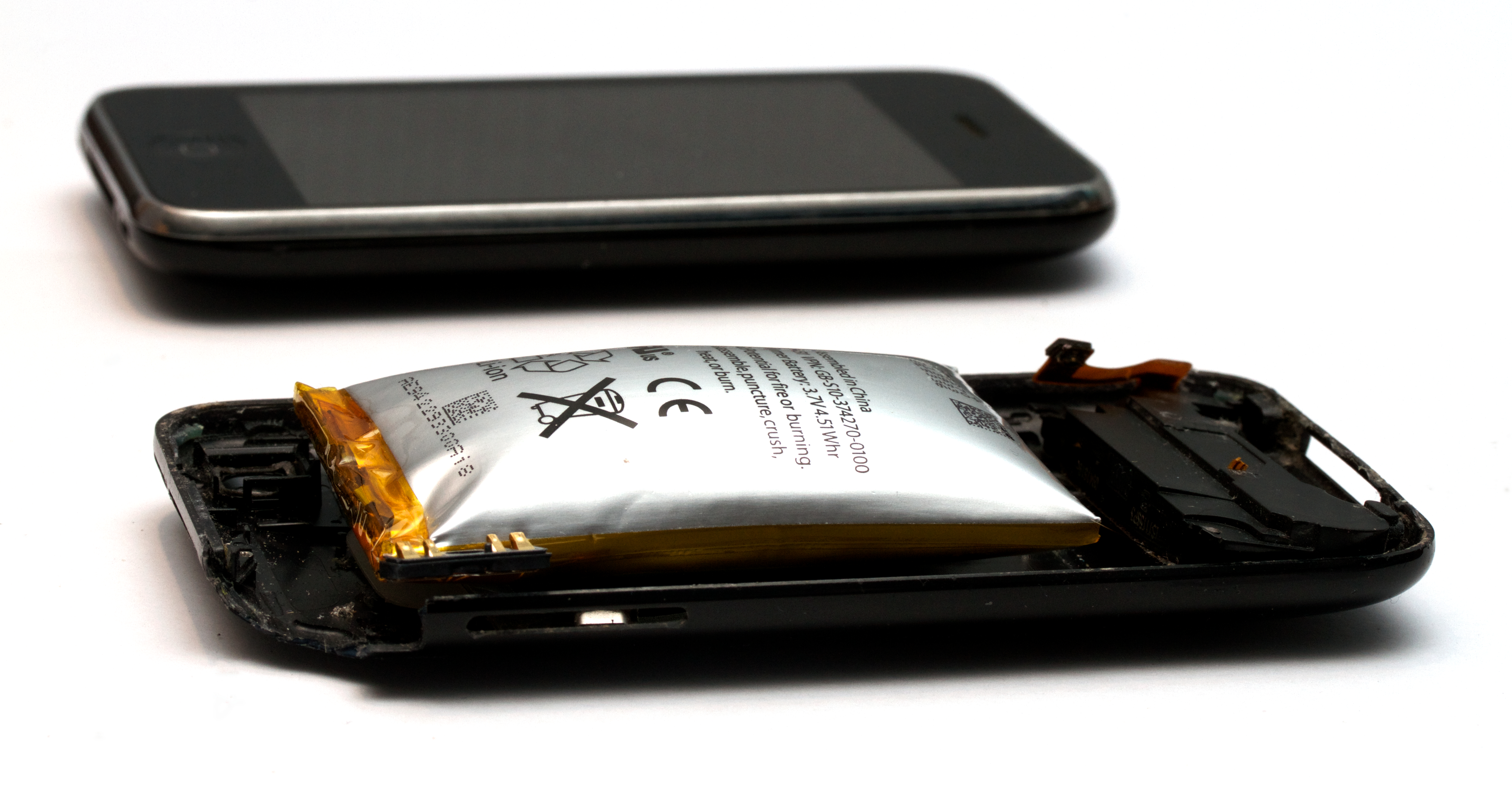
Seven years are easier to picture as a remainder than as a promise. A model withdrawn last year must be kept in parts for another 6 years; one that left the market 4 years ago, for another 3. That remainder is the figure worth working out before buying a used handset.
There is a delivery deadline as well, and it comes in two halves: for the first five years the part must arrive «within 5 working days», for the remaining two «within 10 working days».
What you can check before you pay
Since everything hangs on a single date, the job comes down to finding it.
The support page for the model on the manufacturer's site shows whether it is still in the current range or has moved into the archive. Moved means the counter is running. A second marker is the model's presence in the current price list of an official distributor: disappearing from there is that same end of placement on the market.
Then open the manufacturer's own parts store and look for a battery and a display for your model. The price and the delivery time on the order page are the requirement in its fulfilled form.
One more detail shows up on that same page. Five working days and ten are the two sides of the five-year line, so a store quoting ten is hinting that the model has already lived through its fifth year since withdrawal. As proof it is worth nothing: the regulation sets a ceiling on the deadline, it does not oblige anyone to deliver slowly.
Where the regulation stops reaching
Admission to the EU market is what this document governs, and it is not a guarantee that travels with the handset into any country. A device brought in through grey imports, or bought in the United States, falls outside it, and the manufacturer owes you none of the above.
The second limit matters more. Everything above concerns updates to the system already on the device: security, fixes, features. No requirement to release a new version of the system appears in these points at all. «At least 5 years» sets a floor under the period; it does not promise that in four years' time your phone will be running a fresh Android.
The sources this article was written from
- Regulation (EU) 2023/1670, Annex II, part B.1.2 — operating-system updates: «from the date of end of placement on the market to at least 5 years after that date»; rollout deadlines «at the latest 4 months after the public release of the source code» (security and bug fixes) and «at the latest 6 months after the public release of the source code» (functionality); the conditions «at no cost» and «for all units of a product model with the same operating system»; on loss of performance — «modify the released operating system to ensure at least the same performance as before the update within a reasonable period of time, free of charge»
Regulation (EU) 2023/1670 — https://eur-lex.europa.eu/legal-content/EN/TXT/HTML/?uri=CELEX:32023R1670 - Regulation (EU) 2023/1670, Annex II, part B.1.1 — spare parts for seven years from that same date; the list for professional repairers (battery, cameras, connectors, buttons, microphones, speakers, hinge, folding-screen mechanism) and the list for professional repairers and end users (battery, back cover, protective film, display, charger, SIM tray); delivery deadlines «within 5 working days» and «within 10 working days»
Regulation (EU) 2023/1670 — https://eur-lex.europa.eu/legal-content/EN/TXT/HTML/?uri=CELEX:32023R1670