Is there more of an ingredient if it stands higher in the list?
The order of ingredients on a jar is not the manufacturer's invention: a European regulation requires them to be listed by descending weight. The duty switches off at the one per cent mark, and nothing on the label marks that point — below it the names stand in whatever order suits.
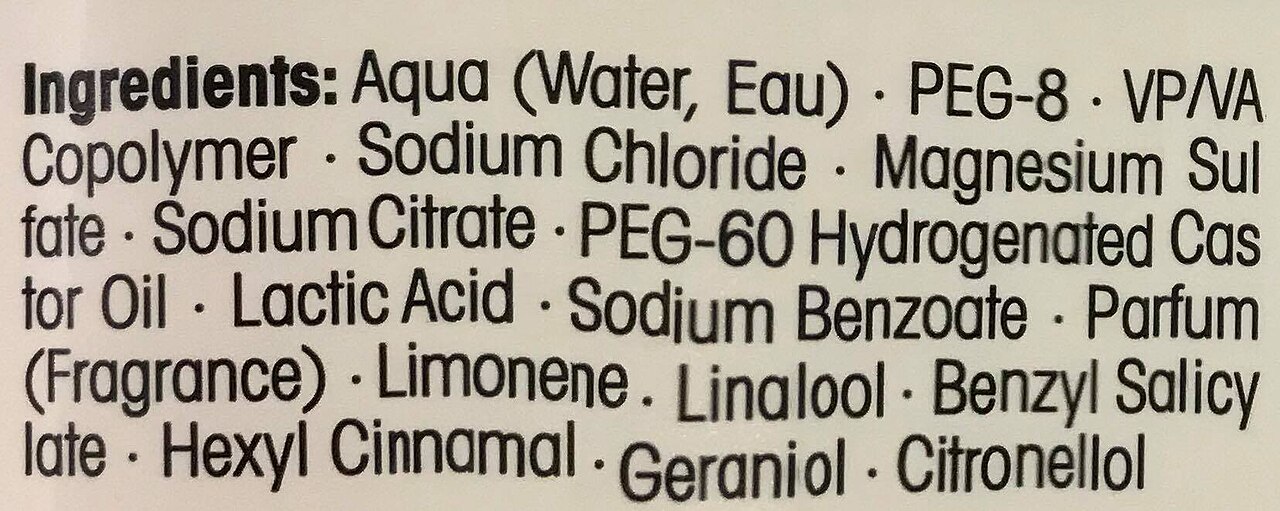
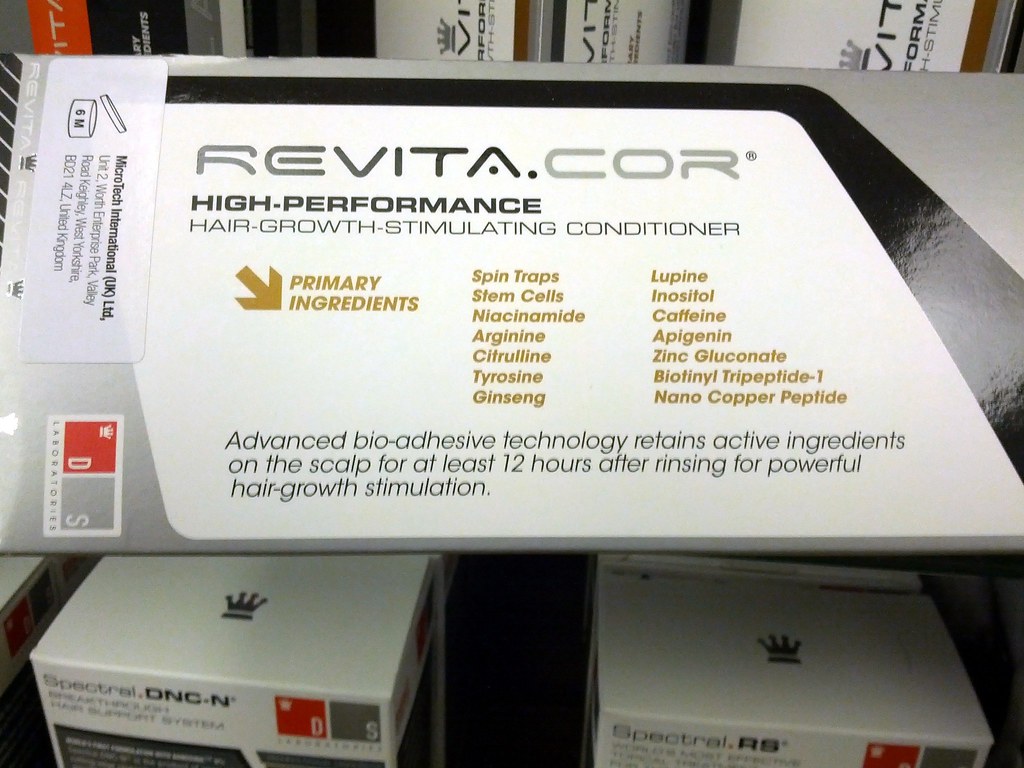
A jar of cream costs three times what its neighbour on the shelf costs, and both promise niacinamide — the name is printed across the front in large letters. On the back, in small type, runs the list of ingredients under the word «ingredients». In the dearer cream niacinamide comes fourteenth of twenty-eight; in the cheaper one, sixth. Standing at the shelf you have a single question: which jar holds more of it?
The easiest assumption is that the maker picks the order and puts the loud name wherever it pays. For cosmetics legally sold in the EU that is untrue — the order is prescribed by law. A second conclusion is then drawn from this, equally wrong: that a position fixed by law corresponds directly to the share, so sixth place is guaranteed to mean more of the substance than fourteenth. There is indeed a guarantee here. What it does not do is run the whole length of the list.
What the regulation actually obliges
Cosmetics labelling across the EU is set by Regulation (EC) No 1223/2009, Article 19. Among the compulsory markings on the packaging it names the list of ingredients, and attaches a requirement that looks trivial: «The list shall be preceded by the term "ingredients"». That word is never translated — which is why the composition is found on a jar in a second even when the rest of the label is in an alphabet you cannot read.
The order itself is fixed by the sentence that follows:
The list of ingredients shall be established in descending order of weight of the ingredients at the time they are added to the cosmetic product.
Weight at the moment of addition, then, and not the make-up of the finished cream. The duty to sort also stops short of the end of the list. One sentence switches it off, and the same sentence is what makes the lower half unreadable:
Ingredients in concentrations of less than 1 % may be listed in any order after those in concentrations of more than 1 %.
This permission has two halves, and the second matters more. Cancelling the order for everything present below a per cent is the work of the first. The second leaves the boundary standing: whatever there is less of still has to come after everything there is more of. The zone of arbitrary order is not scattered through the list — it is continuous, and it starts at a particular point that never appears on the jar.
The boundary exists. It is simply not printed.
A ranking without distances
Above that point the order does work, though it reports less than is expected of it. Between first and second position the gap is sometimes tenfold; between fourth and fifth it can be hundredths of a per cent. On the label the two cases look the same: two lines, one under the other.
Working a concentration out from a position number is impossible, precisely or roughly. The list reports the sign of the difference between neighbours and stays silent about its size. It answers «which is there more of», not «by how much», and that half of the rule has to be learnt alongside the rule itself.
Words with neither order nor quantity behind them
An aromatic composition occupies one word, and Article 19 allows exactly that: «Perfume and aromatic compositions and their raw materials shall be referred to by the terms "parfum" or "aroma"». Dozens of substances hide behind that word, and its position reflects the total weight of the composition, not the weight of any single one of them.
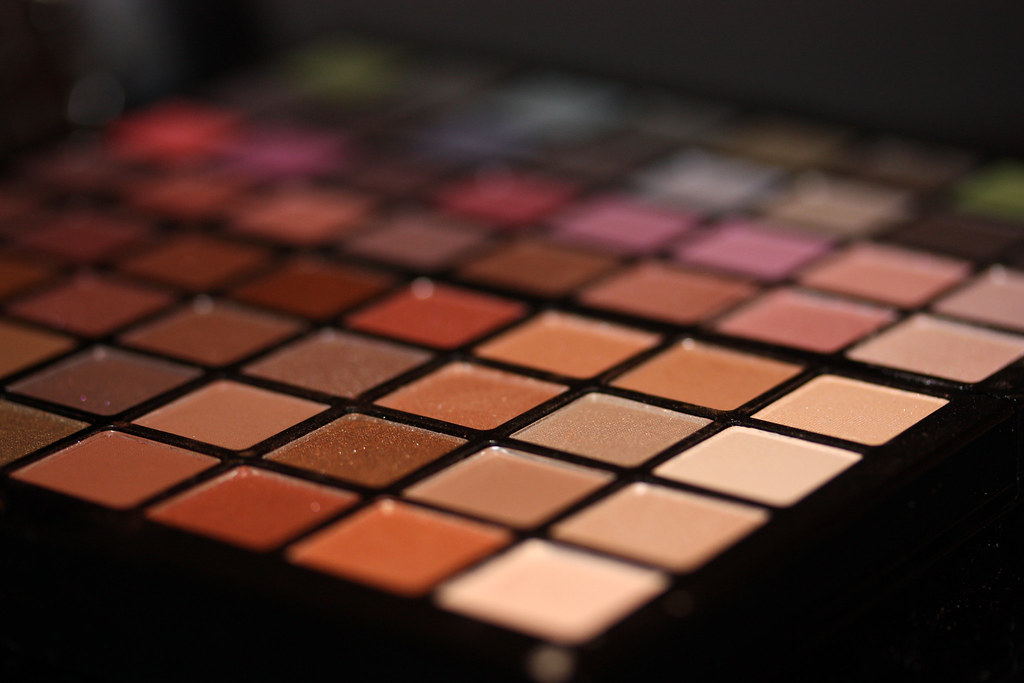
Colorants fall out of the ordering altogether. All of them except those intended to colour the hair «may be listed in any order after the other cosmetic ingredients», and for decorative cosmetics released as a range of shades the regulation goes further still:
For decorative cosmetic products marketed in several colour shades, all colorants other than colorants intended to colour the hair used in the range may be listed, provided that the words "may contain" or the symbol "+/-" are added.
Part of the colorants printed there is therefore physically absent from the tube of that particular shade. Their numbering runs on its own system: «The CI (Colour Index) nomenclature shall be used, where applicable» — hence the five-digit codes such as CI 77891 at the end of a list.
Nanomaterials are flagged but not measured: «All ingredients present in the form of nanomaterials shall be clearly indicated in the list of ingredients. The names of such ingredients shall be followed by the word "nano" in brackets». Brackets report the form a substance is in, not how much of it there is.
Two places where the label does speak in figures
Annex III is the first of them. Twenty-six fragrance substances have to be named separately from the word parfum, and the condition is written as a concentration threshold: «when its concentration exceeds: 0,001 % in leave-on products, 0,01 % in rinse-off products». The two thresholds differ tenfold, and that is what makes them legible.
This is a lower bound and not a value: more is permitted, less is not, or the name would not have been printed separately. But it is the only figure the list hands over directly, and it works precisely where the order has stopped saying anything.
Second comes Annex V, the list of permitted preservatives. Each one gets a row, and the row carries a column headed «Maximum concentration in ready for use preparation». What matters there is which side of one per cent the number falls on:
| Preservative | Maximum in the ready product |
|---|---|
| Phenoxyethanol | 1,0 % |
| Imidazolidinyl urea | 0,6 % |
| Methenamine | 0,15 % |
The lower two rows cannot reach a per cent even in theory: the preservative sits under the mark not by custom but because it is not permitted any higher. The top row is a case of its own that the regulation does not comment on — Article 19 speaks of «less than 1 %» and of «more than 1 %», while exactly one per cent goes unmentioned in the wording.
Take the jar and start from the end
Find the word ingredients and read upwards. At the end there is almost always a dense cluster: the name of a preservative, then parfum, then several names out of Annex III, then CI codes. Under Annex V the preservative in that cluster does not exceed its own limit, and for most preservatives that limit is below a per cent. Everything printed lower than the preservative is under the boundary.
In the other direction the trick fails, and without that caveat the paragraph above becomes a falsehood. The real boundary runs anywhere higher than the preservative: an ingredient present at 0,3 % legally stands six places before it. Nothing in the regulation obliges anyone to mark the transition, so a line found this way is a lower bound on the blind zone rather than the boundary itself.
Two jars are compared like this. Take products of one type — two creams, not a cream and a serum — and look not at the position number but at which side of the preservative the advertised active ingredient sits. If it is above in one and below in the other, a difference in share really is there. If it is below in both, the two lists are silent in the same way, and the dearer jar gains no advantage from its own.
An unfamiliar name is worth checking in CosIng, the European Commission's database of cosmetic ingredients (ec.europa.eu). Paragraph 19(6) requires the packaging to carry «the common ingredient name set out in the glossary provided for in Article 33», and Article 33 obliges the Commission to have regard to «internationally recognised nomenclatures including the International Nomenclature of Cosmetic Ingredients (INCI)». The name on the jar and the name in the database coincide for a reason.
What no list will ever yield
Article 19 puts the list in order and does not oblige anyone to name a single concentration: a requirement to state a share is absent from it entirely. Paragraph 19(4) then removes even the order — for cosmetics that are not pre-packaged, that are packaged at the point of sale at the purchaser's request or packed for immediate sale, «Member States shall adopt detailed rules for indication of the information referred to in paragraph 1». What is written beside soap sold by weight is decided by the country.
The sources this article was written from
- Regulation (EC) 1223/2009, Article 19 — the list of ingredients, its order and the exceptions. Verbatim: «a list of ingredients. This information may be indicated on the packaging alone. The list shall be preceded by the term "ingredients"»; «The list of ingredients shall be established in descending order of weight of the ingredients at the time they are added to the cosmetic product»; «Ingredients in concentrations of less than 1 % may be listed in any order after those in concentrations of more than 1 %»; «Perfume and aromatic compositions and their raw materials shall be referred to by the terms "parfum" or "aroma"»; «All ingredients present in the form of nanomaterials shall be clearly indicated in the list of ingredients. The names of such ingredients shall be followed by the word "nano" in brackets»; «Colorants other than colorants intended to colour the hair may be listed in any order after the other cosmetic ingredients»; «For decorative cosmetic products marketed in several colour shades, all colorants other than colorants intended to colour the hair used in the range may be listed, provided that the words "may contain" or the symbol "+/-" are added»; «The CI (Colour Index) nomenclature shall be used, where applicable»; para. 19(4) — «Member States shall adopt detailed rules for indication of the information referred to in paragraph 1»; para. 19(6) — «the common ingredient name set out in the glossary provided for in Article 33»
Regulation (EC) No 1223/2009 — https://eur-lex.europa.eu/legal-content/EN/TXT/HTML/?uri=CELEX:32009R1223 - Regulation (EC) 1223/2009, Annex III, entries 67–92 — the thresholds for naming fragrance substances separately. Verbatim: «when its concentration exceeds: 0,001 % in leave-on products, 0,01 % in rinse-off products»
Regulation (EC) No 1223/2009 — https://eur-lex.europa.eu/legal-content/EN/TXT/HTML/?uri=CELEX:32009R1223 - Regulation (EC) 1223/2009, Annex V — maximum preservative concentrations. The column «Maximum concentration in ready for use preparation»: phenoxyethanol 1,0 %, imidazolidinyl urea 0,6 %, methenamine 0,15 %
Regulation (EC) No 1223/2009 — https://eur-lex.europa.eu/legal-content/EN/TXT/HTML/?uri=CELEX:32009R1223 - Regulation (EC) 1223/2009, Article 33 — the glossary of common ingredient names kept by the European Commission, having regard to «internationally recognised nomenclatures including the International Nomenclature of Cosmetic Ingredients (INCI)»; the glossary itself is available in the CosIng database
Regulation (EC) No 1223/2009 — https://eur-lex.europa.eu/legal-content/EN/TXT/HTML/?uri=CELEX:32009R1223